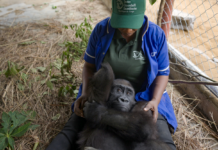







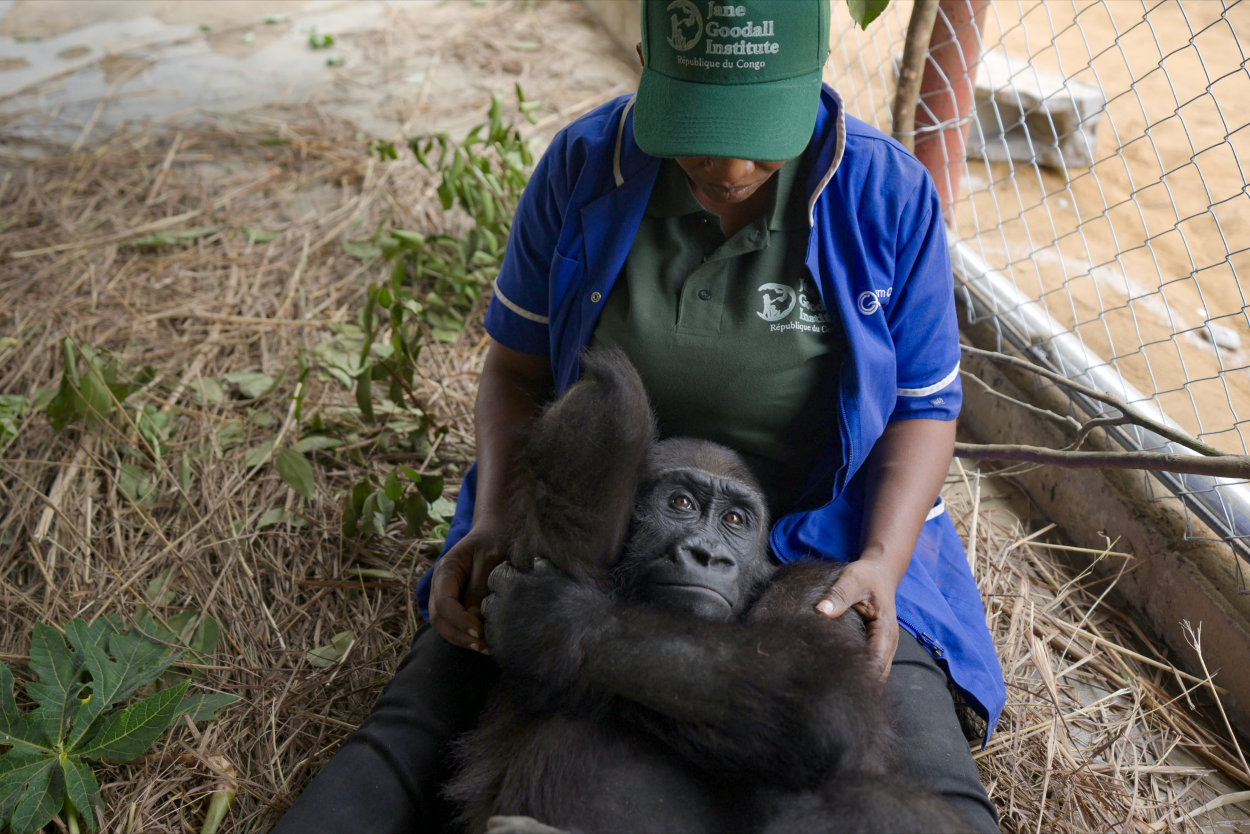
For more than three years, a young female gorilla named Bili lived far from home in Nigeria, rescued from wildlife traffickers but with her exact origins unknown. This week, that changed. On Wednesday, the Nigeria Customs Service confirmed it had flown Bili home to the Republic of Congo, completing what it described as the service’s first full-cycle international wildlife operation, and offering a rare reversal of a trafficking route that has historically run into Nigeria, not out of it.
From rescue to repatriation, three years in the making
Bili was rescued by Nigeria Customs officers in August 2023 during an enforcement operation against wildlife trafficking, according to Abdullahi Maiwada, the service’s spokesman. What followed was more than three years of rehabilitation in Nigeria, during which her species was confirmed as gorilla but her precise origin remained uncertain, a common problem in trafficking cases, where seized or surrendered animals often arrive without documentation of where they were taken from.
Read also: Conservationists urge ”tighter wildlife laws” after Trump move
That changed this year. A DNA test confirmed Bili had originated in the Republic of Congo, opening the door to repatriation rather than permanent relocation to a Nigerian sanctuary. Between 22 and 28 September, Customs officials arranged her transfer from Calabar, Cross River State, to Lagos, then airlifted her to Pointe-Noire, Republic of Congo, via DHL at no cost to the service, accompanied by a caregiver and a veterinary doctor. She has since been transferred to the Réserve Naturelle de Tchimpounga in Pointe-Noire, where she is expected to continue her rehabilitation.
The operation was supported by Nigeria’s CITES Management Authority under the Federal Ministry of Environment, alongside the Pandrillus Foundation, DHL, Focused Conservation, the Aspinall Wildlife Trust and the government of the Republic of Congo. Maiwada said the exercise demonstrated Nigeria’s commitment to its international wildlife protection obligations and efforts to combat illegal wildlife trafficking.
A trade that usually flows the other way
Bili’s journey home is notable partly because it runs against the grain of how the ape trafficking trade typically moves through Nigeria. Investigative reporting by Mongabay and others has documented Nigeria functioning less as a source country and more as a continental hub, receiving trafficked ape body parts and live infants from Central African countries including Cameroon, the Democratic Republic of Congo and the Republic of Congo, then channelling them onward, domestically and internationally. One conservationist described Nigeria as “the coordinating centre for ape body part trade in Africa,” noting that once a trafficked ape part reaches Nigerian markets, its financial value increases further.
Read also: The Last Gorillas of Nigeria: A Race to Keep Them Wild and Free
Nigeria’s own gorilla population adds urgency to that context. The Cross River gorilla, a subspecies found only in the mountainous border region between Nigeria and Cameroon, is Africa’s most endangered great ape, with roughly 100 individuals remaining in Nigeria across three protected sites in Cross River State, out of a total wild population estimated at under 300. The species is listed as Critically Endangered by the International Union for Conservation of Nature, with hunting for bushmeat and body parts identified as the single greatest threat it faces. Bili was not one of these animals, her Congolese origin makes that clear, but her case sits within the same broader enforcement landscape that governs how Nigeria treats both trafficked and native great apes.
The wider enforcement picture
Bili’s repatriation was announced alongside broader enforcement figures covering the year to date. Between January and September 2026, Nigeria Customs’ Special Wildlife Office and Customs Area Commands recorded 22 wildlife seizures, rescued 699 live animals, and arrested 11 suspects in connection with wildlife trafficking. In September alone, officers intercepted 440 African mud turtles and 90 ostrich chicks. Bashir Adewale Adeniyi, Comptroller-General of Customs, oversees the service during what it has described as a period of intensified enforcement against the illegal wildlife trade.
What one gorilla’s journey home represents
Bili’s case will not on its own change the trafficking patterns documented across Nigeria’s forested states and trading hubs. But it offers a concrete, verifiable example of what full-cycle enforcement, interception, rehabilitation, correct species and origin identification, and international coordination for return, actually looks like when it functions as intended. Whether Nigeria can replicate that model for its own critically endangered Cross River gorillas, rather than only for animals passing through its territory, remains a separate and considerably harder test.