

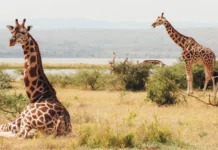














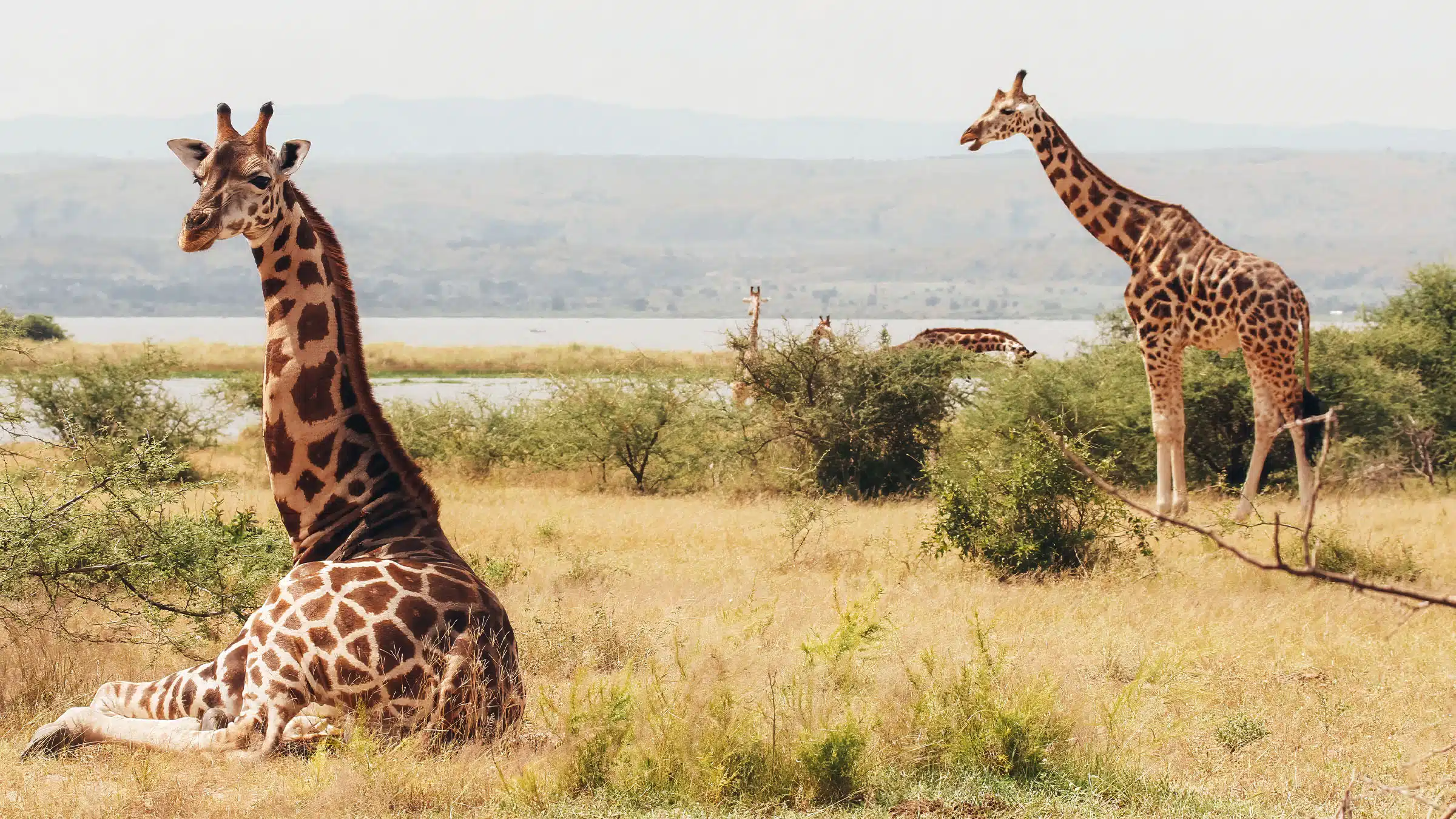
For decades, South Sudan’s prolonged conflict has made large-scale wildlife research in the country difficult, if not impossible. A new genomic study, published in September, offers a rare and encouraging answer to the question of what that conflict may have done to one of its most endangered large mammals: the Nubian giraffe appears to be holding on, genetically, far better than feared.
What the study actually found
Researchers from the South Sudan government, the Giraffe Conservation Foundation (GCF) and the conservation NGO African Parks analysed DNA from skin biopsies collected from 30 Nubian giraffes in Boma and Badingilo National Parks, both managed by African Parks in eastern South Sudan. Sam van Giessen, a conservation genomics researcher at the University of Amsterdam, led the study, with co-authors including Julian Fennessy of the Giraffe Conservation Foundation and Axel Janke of Goethe University in Germany. It was published in Scientific Reports on September 5.
Read also: Poachers kill rare dazzling white giraffe
The population’s genetic diversity, measured as heterozygosity, came out at roughly 0.14%, with minimal evidence of inbreeding, a result researchers did not expect given the near-total absence of organised wildlife management in South Sudan during decades of conflict. By comparison, the South Sudan population showed notably lower inbreeding than Nubian giraffes in Kenya, whose population has historically descended from a much smaller founding group.
“Regions of the world that have been affected by conflict can maintain a lot of biodiversity and should therefore not be overlooked by genetic studies and conservation efforts,” Sam van Giessen, the study’s lead author, told Mongabay. Researchers described the South Sudan population as a genetic stronghold for the subspecies as a result.
Why this population matters so much
The stakes behind this finding are considerable. Nubian giraffes are classified as Critically Endangered, and population figures vary by source and year, but researchers have documented a decline of roughly 95% in the Ethiopia-South Sudan population between 1985 and 2025, with recent estimates placing the South Sudan population at only a few hundred individuals. Given numbers that low, conservation geneticists had real reason to worry that decades without coordinated management might have allowed inbreeding to quietly erode the population’s genetic resilience. The study’s finding that this has not happened, at least not yet, gives conservationists a clearer, evidence-based case for prioritising protection in the Boma-Badingilo landscape specifically.
What researchers say comes next
The study’s authors and other conservationists working in the region point to political stability and improved security as the critical preconditions for turning this genetic finding into durable protection on the ground. Continued genetic monitoring is recommended to track whether this diversity holds as conditions in South Sudan evolve, alongside efforts to strengthen protected-area management in Boma and Badingilo as security allows.
The broader lesson
The study’s central argument extends beyond giraffes specifically. Conflict-affected landscapes are too often assumed to be ecological write-offs, excluded from research and conservation planning simply because access is difficult or dangerous. South Sudan’s giraffes suggest that assumption deserves more scrutiny. Regions shaped by war may still hold genetically vital wildlife populations that conservation planning, both now and in any future peace process, would be wrong to overlook.