
















Residents across Lagos, Rivers and Akwa Ibom states are grappling with worsening plastic pollution and flooding just as the Federal Government rolls out its most ambitious plastic waste law yet, exposing a wide gap between new regulation and daily reality on Nigeria’s streets.
Lagos residents caught between old habits and new enforcement
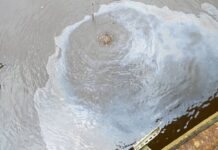
A visit by the News Agency of Nigeria (NAN) to a school in Iponri, Lagos, on Thursday found discarded plastic bottles and nylon bags blocking a drainage channel near the canal. Abdulrasaq Abdulmujeeb, a resident, admitted he disposes of waste indiscriminately. “When I’m in a public vehicle, I will just throw it outside the window,” he told NAN, adding that nobody had ever taught him to sort his waste.
Not every resident is as careless. Esther Nwabueze, also of Iponri, said she holds onto plastic waste until she is heading out to dispose of it properly, but warned that dumping in drainage channels “could cause blockages, flooding and accidents on major roads.” At Cemetery Roundabout in Amukoko, resident Daniel Simon blamed the shortage of public bins: “If streets have waste bins, people will get used to putting their trash inside.”
The Lagos State Environmental Protection Agency (LASEPA) says the scale of the problem is outpacing infrastructure. Babatunde Ajayi, General Manager of LASEPA, said population growth had strained waste management systems, while Friday Oku, President of the Association of Scrap and Wastepickers of Lagos, warned that plastics dumped in drains were worsening environmental challenges and threatening aquatic life.
Read also: Critically endangered rhinoceros gives birth at Kansas City Zoo
Enforcement is tightening in response. On 9 September, the Lagos Waste Management Authority arrested a resident of Lanre Adefiranye Street, Meiran, for dumping refuse into a drainage channel during rainfall, in a joint operation with the Lagos State Environmental Sanitation Corps and mobile police. The arrest was documented on X by Muyiwa Gbadegesin (@muyiwag), whose post showed LAWMA officials clearing the refuse and warned that offenders would face prosecution.
Port Harcourt’s fading ‘Garden City’ identity
In Rivers State, the crisis has taken a toll on Port Harcourt’s reputation as Nigeria’s “Garden City.” A Guardian Nigeria investigation by Ann Godwin found illegal dumpsites persisting along Eagle Road in Diobu, and refuse piling up on road medians along Ada George Road, despite state-funded evacuation efforts. Contractors clearing waste along the East-West Road were seen returning barely 30 minutes later to find fresh heaps already forming near the Obio/Akpor Local Council headquarters.
Michael Mba, a resident of Ojoto Street, Mile 2, placed responsibility squarely on public behaviour: “People must properly bag and dispose of their refuse instead of dumping it on road medians.” Patricia Nkemakoli, another resident, called for a sustainable user-pay waste system, arguing that treating refuse collection purely as a free social service places unsustainable pressure on government finances.
The Rivers State Waste Management Agency (RIWAMA) says funding is not the bottleneck. “The problem is not funding by the government,” said Harry Henry, Head of Media to the agency’s Managing Director. “The challenge arose because contractors went on strike… There has been significant improvement since the contractors resumed work.” Dr Ephraim Iloabuchi, a family physician at the University of Port Harcourt Teaching Hospital, warned that the consequences extend well beyond aesthetics: blocked drains create stagnant water that breeds mosquitoes and raises the risk of malaria, typhoid and leptospirosis.
Akwa Ibom counts the human cost
Akwa Ibom State has faced some of the most severe consequences this year. Flooding in Uyo submerged homes and businesses along Oron Road, Tabernacle Road and Abak Road, among other areas. Otuekong Ebong Bassey, a resident, shared footage on social media of his flooded ancestral home, raising concern for his family’s safety after the building was submerged and his late father’s tombstone was nearly washed away, according to reporting by The Guardian Nigeria.
In response, Umo Eno, Governor of Akwa Ibom State, established an emergency sanitation court empowered to jail environmental offenders and reintroduced a monthly sanitation exercise with penalties ranging from fines to community service. The state has budgeted N2.5 billion for drainage and canal desilting in Uyo alone, though residents in some communities say recurring flooding persists despite the spending.
A new national rulebook meets old habits
The state-level struggles come as the Federal Government moves to overhaul how Nigeria manages plastic waste nationally. On 3 September, the National Environmental Standards and Regulations Enforcement Agency (NESREA) unveiled the National Environmental (Plastic Waste Control) Regulations, 2026, in Abuja. Balarabe Lawal, Minister of Environment, represented by Permanent Secretary Salihu Usman, said the rules would shift Nigeria from a “make, use and throw away” system toward a circular economy built on recovery, recycling and resource efficiency.
Read also: Concerns rising over dead fish along Niger Delta coastlines
Nigeria generates an estimated 2.5 million tonnes of plastic waste annually, much of which ends up in drains, waterways and communities. Under the new Extended Producer Responsibility framework, manufacturers, importers and brand owners will be required to manage the full life cycle of the plastic products they place on the market, including mandatory recycled content in packaging by January 2028.
Garba Datti Muhammad, Chairman of NESREA’s Governing Board, described plastic pollution as “a major threat to waterways, livelihoods, communities and public health,” while Isabelle Vanderbeek, a UNEP representative, called the regulation’s unveiling a milestone, stressing that ending plastic pollution would require collaboration across government, industry and citizens.
Whether that collaboration reaches residents like Abdulmujeeb in Lagos, Mba in Port Harcourt, or the flood-hit families of Uyo may determine whether Nigeria’s new rulebook translates into cleaner drains before the next rainy season.