










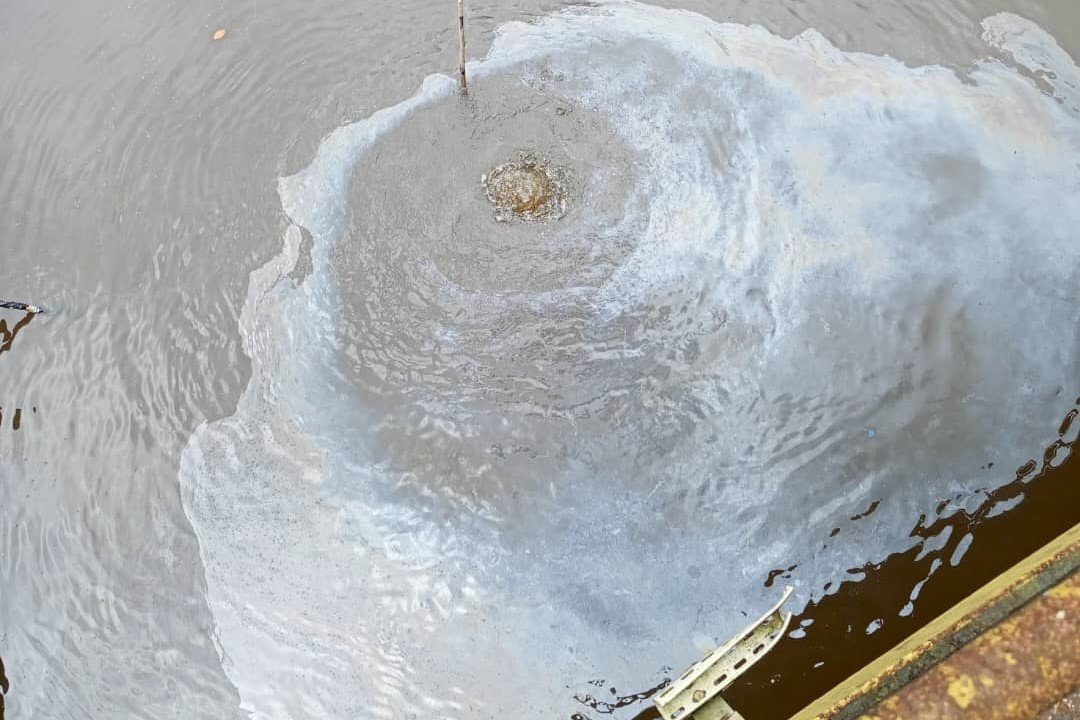
More than three months after crude oil first blackened the mangrove swamps of Azuzuama community in Bayelsa State, the spill remains unrepaired, and a fresh dispute has emerged over whether the official investigation into it even recorded the right date.
The leak that won’t stop
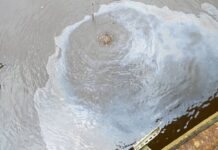
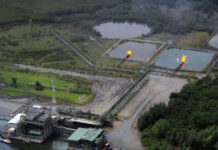
The spill began on June 25, 2026, when a rupture occurred along Oando’s six-inch Azuzuama-Tebidaba flow line in Southern Ijaw Local Government Area, discharging crude oil into the surrounding waterways and farmland. According to a fresh field report dated September 28, 2026, from the Environmental Conservation Agriculture and Rural Development (ECARD), signed by field monitor Alagoa Morris, the leak has continued unabated since that date, polluting the aquatic environment for more than three months.
ECARD said underwater inspection by divers confirmed a suspected 11-millimetre tear at the “three o’clock position” on the submerged section of the pipeline. Angasei Perediseghebofa, Chairman of the Azuzuama Community Development Committee, confirmed on September 24, that the ruptured section remained unrepaired and that bubbling crude was still visible at the site, despite what ECARD describes as repeated follow-up efforts in July, August and September.
A new dispute: did the JIV get the date wrong?
Beyond the unrepaired leak itself, ECARD’s latest report raises a specific, document-level allegation: that the statutory Joint Investigation Visit (JIV) report wrongly recorded 29 August as the date of the incident, rather than June 25, when the leak was first discovered and documented. ECARD said it holds geotagged photographs and video showing the bubbling leak site dating back to June 25, directly contradicting the JIV’s recorded timeline.
Read also: Nembe Creek Oil Spill Exposes Nigeria’s Recurring Accountability Gap
This date discrepancy is not a minor clerical matter. Under Nigerian petroleum regulation, the length of time an operator can be shown to have known about an unrepaired leak bears directly on questions of liability, negligence and the scale of compensation owed to affected communities. A JIV report that understates how long a spill has gone unaddressed by more than two months would materially understate the operator’s exposure.
The underlying dispute: sabotage, or neglect?
The date dispute layers on top of an unresolved disagreement that has simmered since July. Following the original JIV, Oando’s corporate communications team said an Ultrasonic Thickness Measurement test indicated evidence “consistent with induced corrosion caused by third-party interference, commonly described as sabotage.” A technical participant in the JIV process, identified in reporting as Enai, argued the corrosion pattern was concentrated at the pipe’s apex in a way natural corrosion rarely produces, a finding that, if accepted, legally reduces Oando’s compensation liability under Nigerian petroleum law.
The Azuzuama Community Development Committee has firmly rejected this conclusion. Perediseghebofa said the visible rust on the exposed pipeline indicated ordinary corrosion, not sabotage, and alleged that testing devices introduced by Oando malfunctioned during the inspection, preventing a credible determination of the cause. Uyabara Boneghen, the committee’s Vice Chairman, separately questioned the reliability of Oando’s testing equipment and flagged a second, apparently still-uninvestigated leak with bubbling gas beneath a nearby platform.
Why this community is watching so closely
The dispute carries particular weight in Azuzuama because of history. Residents have repeatedly invoked a July 9, 2015 pipeline explosion at the same location that killed 14 people, including officials of the National Oil Spill Detection and Response Agency (NOSDRA) and the Bayelsa State Ministry of Environment who were present for that spill’s own Joint Investigation Visit. “We cannot forget July 9, 2015,” one resident, identified only as Ebi, said.
Read also: Clean Tech, Mini-Grids, Land Conservation: How Nigeria Plans to Cut Emissions 32%
Environmental experts cited across multiple reports have said the divergent conclusions reached by regulators, the operator and community representatives have rendered the JIV process inconclusive, and have called on Oando to immediately mobilise containment measures and begin remediation regardless of how the liability dispute is ultimately resolved.
What remains unresolved
As it stands, three separate questions remain open more than three months after the spill began: what actually caused the rupture, whether the JIV’s recorded timeline can be trusted, and when, if ever, the physical leak itself will be repaired. ECARD’s latest report has now called on NOSDRA and the Nigerian Upstream Petroleum Regulatory Commission to intervene directly. Whether that intervention produces answers, or simply adds another layer to an already contested paper trail, is the test this dispute now faces.