





At the end of November 2025, a small, distressed male elephant calf was found wandering alone in the vast oil palm plantation bordering Okomu National Park in Edo State. Separated from his mother and vulnerable to the elements, his chances of survival in the wild were virtually zero.
But what happened next is a story of extraordinary human dedication, cross-border collaboration, and a fierce commitment to preserving one of Nigeria’s most critically endangered species.
According to the Africa Nature Investors (ANI) Foundation’s 2025 Annual Report, the discovery of the calf triggered an immediate, multi-agency rescue operation. ANI, in collaboration with the National Park Service (NPS) and the Okomu Oil Palm Company Plc. (OOPC), moved quickly to transport the infant to the park’s Arakhuan Outpost.
A race against time
Orphaned baby elephants are notoriously difficult to raise. They require constant contact to survive the trauma of losing their mothers, and the first few weeks are a perilous fight for life.
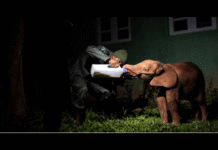
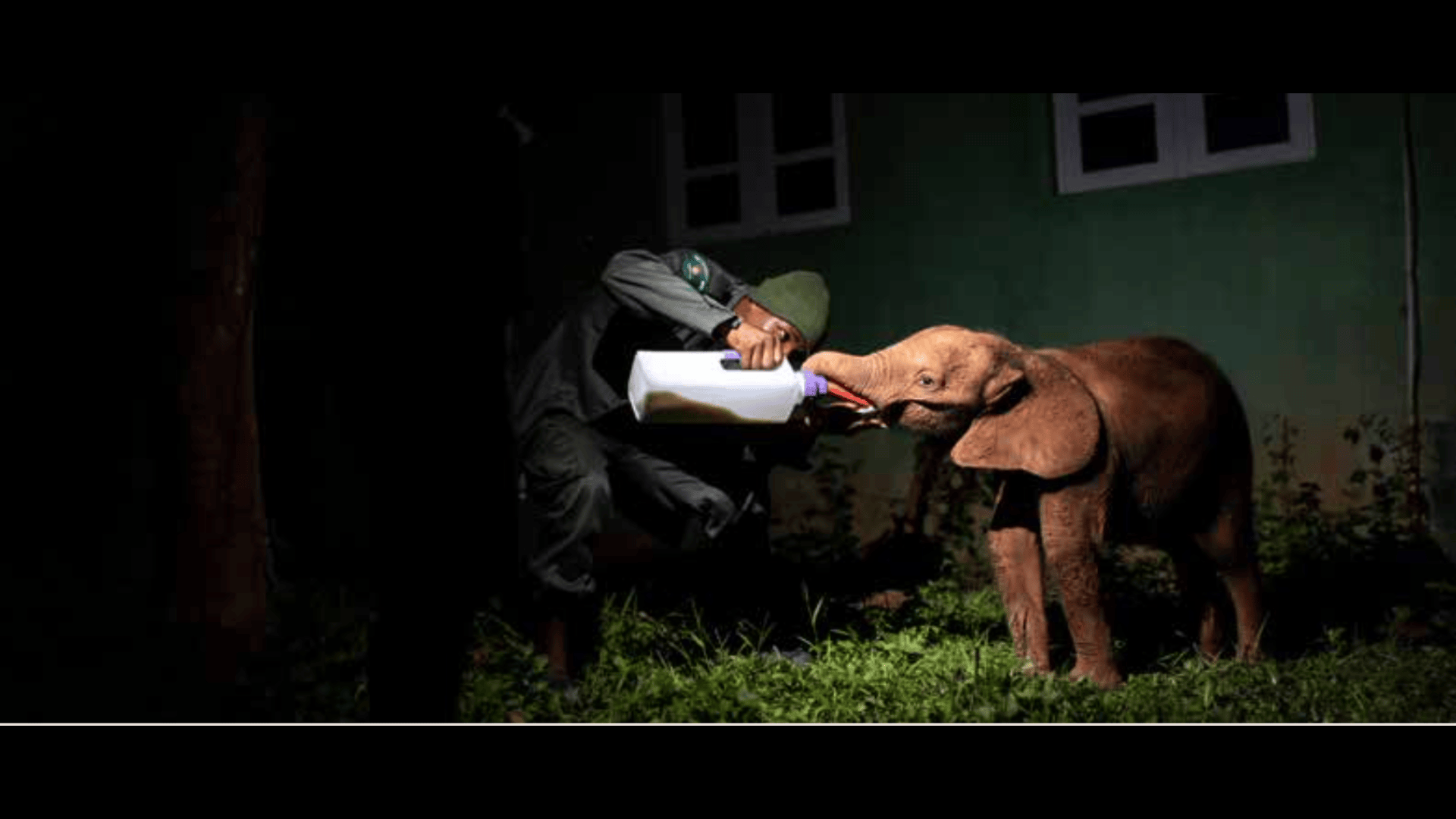
Recognising the urgency, the team reached out to the Elephant Crisis Fund (ECF), which connected them with Liz O’Brien, an elephant rescue specialist based in Zambia. With Liz’s support via WhatsApp, the team frantically scrambled to source powdered milk, oats, coconut oil, and baby formula. Two rangers were immediately assigned to provide 24-hour care and contact.
For four days, as park rangers and OOPC’s eco-guards scoured the dense forests trying to locate the calf’s mother with little success, ANI and NPS made a critical decision: they would hand-rear the elephant with the ultimate goal of reintroducing him back to the wild herd.
Read also: Biodiversity Day: Obaseki lauds Okomu National Park’s potential
The infant almost died three times in those first few weeks due to infections, but thanks to the timely interventions of two dedicated vets from OOPC—sometimes in the middle of the night—he pulled through.
It was only after his condition stabilised that the park rangers voted to give him a name: Agbaibor, an Edo name that means “brave.”
A new kind of motherhood
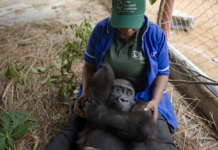
Today, Agbaibor is the center of a highly intensive, round-the-clock operation. A dedicated team of five keepers, two vets, and Liz oversees his care, feeding him every three hours.
Mindful that his long-term survival depends on his ability to live in the wild, the keepers — who effectively act as his surrogate mother — have minimised his contact with other humans.
The plan for the next 18 months is meticulously mapped out. Agbaibor will be moved to an enclosure deep inside the park where he will live alongside his five keepers and four rangers. He will continue to be fed milk and baby formula, but over time, this will gradually be replaced by forest leaves that will form his diet in the wild. Eventually, the enclosure’s gates will be left open, giving Agbaibor the opportunity to rejoin the wild elephant population of Okomu National Park.
Why every elephant counts
The rescue of Agbaibor is not just a heartwarming tale; it is a critical conservation intervention. The African forest elephant (Loxodonta cyclotis) is listed as Critically Endangered by the IUCN. With fewer than 100 believed to remain in Nigeria, and an estimated 30 to 40 individuals in Okomu National Park, every single elephant is precious.
By keeping Agbaibor in the Okomu National Park, the rescued elephant can continue to be part of the park’s breeding population.
“We hope Agbaibor will not just be a survivor but a father to the next generation of Okomu’s forest elephants,” the ANI report states.
Read also: How baby elephant strayed, died in Okomu
The calf’s rescue has also captured the imagination of the Nigerian public, with enormous interest from citizens across the country in his survival. While the cost of rearing him is high and was unplanned for, it represents a powerful symbol of what can be achieved when conservation organizations, private companies, and local communities unite for a single, vulnerable life.
As Agbaibor takes his first clumsy steps into the deeper forest, he carries the hopes of a species on his small shoulders—proof that even in the face of overwhelming odds, nature can be brought back to life.