













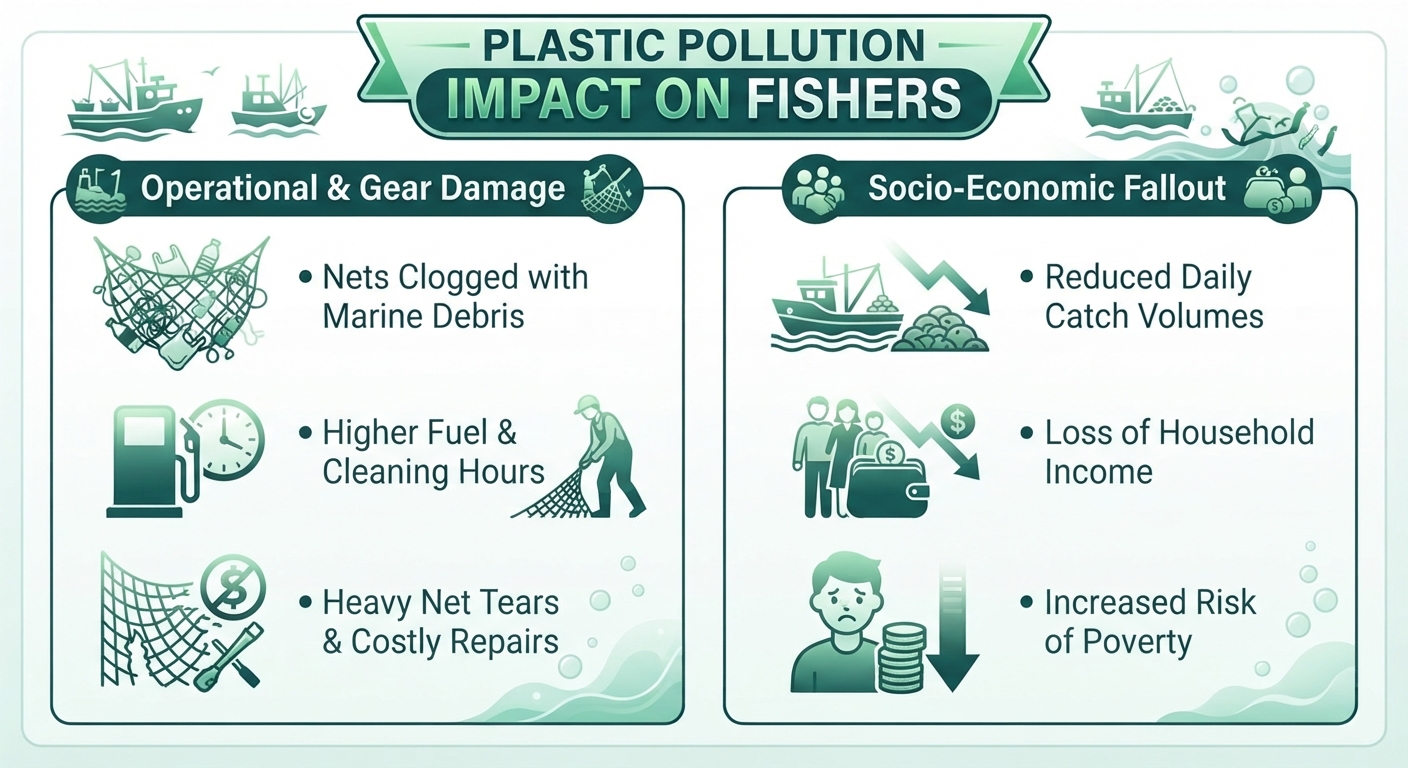
In the bustling coastal villages of central Vietnam, small-scale fishers are wrestling with a new, invisible catch: plastic. A recent field study conducted by marine researchers found that the majority of fishers surveyed pull daily hauls tangled with plastic bags, bottles, aquaculture feed bags, nylon netting, and stray ropes. The contamination not only damages gear but also reduces the volume of fish that can be landed, threatening livelihoods that depend on the sea for survival.
Plastic pollution has become a silent economic crisis for Vietnam’s 1.2 million coastal fishers, who already face fluctuating markets and climate pressures. When nets are clogged with debris, fishers must spend extra time and fuel to clear them, while damaged gear often requires costly repairs. The study estimates that the added expenses and lost catch translate into a substantial dip in household income for many families, pushing some below the poverty line and undermining food security in already vulnerable communities.
Field surveys reveal rising gear damage and microplastic risks
Researchers interviewed over 200 fishers across the provinces of Quang Nam, Thua Thien-Hue, and Binh Thuan between March and July 2026. Respondents described “near-daily” encounters with plastic, noting that even items designed for marine use—such as aquaculture feed bags—end up as litter after being discarded or lost at sea.
“A single 10-kilogram bag of plastic once ripped a 150-metre net, rendering it unusable for weeks,” — Tran Van Nam, a veteran fisherman said.
The cumulative impact is clear: reduced catch rates, higher operating costs, and growing health concerns as microplastics infiltrate the seafood chain.
Read also: Climate Heatwaves Threaten Hawaiian Humpbacks as Marine Food Web Collapses
Grassroots cooperatives pilot net-cleaning and waste recycling schemes
Yet the same communities are also becoming part of the solution. Fishers’ cooperatives have begun organising regular “net-clean” days, partnering with non-governmental organisations to collect and recycle debris before it returns to the water. Some villages are piloting biodegradable feed bags and advocating for stricter waste-management enforcement along the shoreline. Government officials have expressed interest in scaling these grassroots initiatives, seeing them as a cost-effective complement to national marine-pollution policies.
Read also: The Grassroots Economics of ACReSAL’s Pre-Appraisal Mission
If these local actions gain momentum—and receive the backing of policymakers, industry, and consumers—the tide could turn for Vietnam’s coastal fishers. By removing plastic from their nets, they can restore catch volumes, protect health, and set a replicable example for fishing communities worldwide grappling with the same scourge.