










As Nigeria marked World Rivers Day on Monday, the message from its water resources ministry was less celebratory than diagnostic: the country’s rivers are under mounting pressure, and the response to that pressure has, until now, been too scattered to match it.
A river chosen to make the point
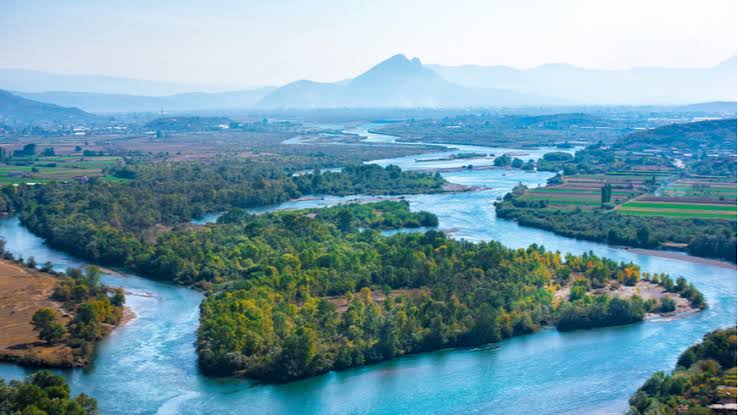
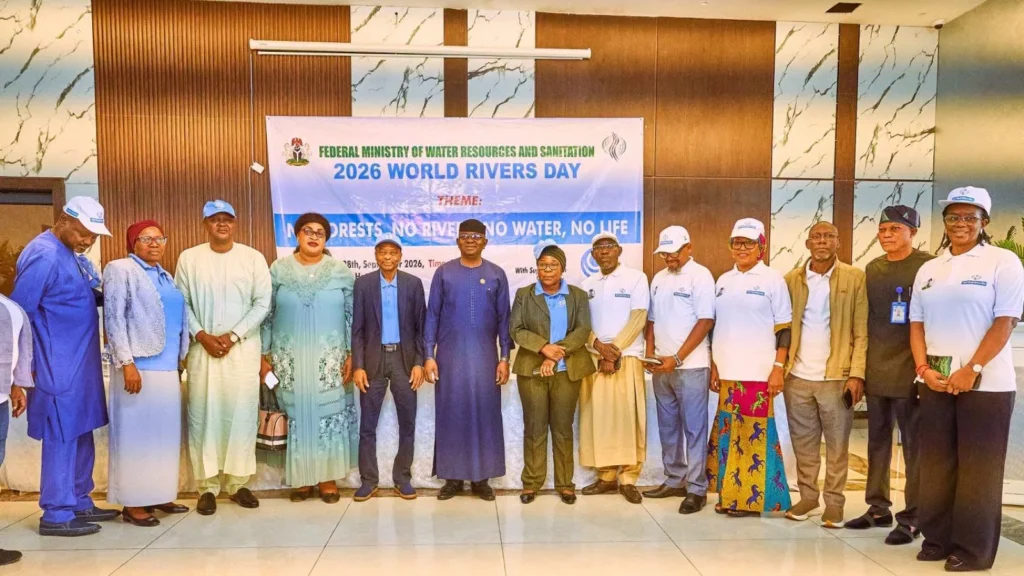
Joseph Utsev, Minister of Water Resources and Sanitation, led the 2026 commemoration in Abuja, choosing the Wupa River along Kuje Road as the site for what the ministry described as an opportunity for practical engagement on protecting and restoring waterways and the ecosystems around them. World Rivers Day is observed annually on the fourth Sunday of September to raise awareness of river conservation and sustainable management.
Nigeria’s water network is extensive. The country is home to more than 80 major rivers, the largest being the Niger and Benue, organised into eight principal drainage basins: the Niger, Benue, Delta and Cross Rivers, Imo-Anambra, Hadejia-Chad, Sokoto-Rima, and Ogun-Osun basins. Twelve River Basin Development Authorities, first established in 1976 and restructured over subsequent decades, are charged with managing these basins on behalf of the Federal Government.
Read also: Climate Volatility Threatens Global Water Security as Over Half of River Basins Face Abnormal Flows
Utsev told attendees that Nigeria’s rivers face pollution from domestic, industrial and agricultural activity, indiscriminate waste disposal, deforestation, erosion, sand mining and uncontrolled development along river corridors, compounded by climate change. These pressures, he said, carry direct consequences for water quality, public health, agriculture, biodiversity and the livelihoods of millions of Nigerians who depend on water resources.
The case for integration over fragmentation
The minister’s central argument was structural rather than technical: watershed management across those 12 authorities and eight basins has relied too heavily on disconnected interventions. “These challenges require us to move from a fragmented approach to a more integrated and sustainable management of our watersheds and water resources,” Utsev said. He added that the government is strengthening Integrated Water Resources Management and improving its capacity to collect and analyse data on rainfall, river flows, groundwater and water quality, framing better data as a precondition for coordinated action.
Utsev also pointed to progress under the government’s Clean Nigeria Campaign, which has recorded 179 Local Government Areas validated as Open Defecation Free and supported more than 5,238 public sanitation facilities nationwide, a metric he linked directly to river health given the connection between sanitation infrastructure and waterway pollution.
Community knowledge and the next generation
Beyond infrastructure and data, Utsev appealed for greater community participation in river management, arguing that local communities hold valuable knowledge about water sources and environmental change that should inform the design, implementation and monitoring of water-resource programmes. Ali Ibrahim Dallah, Director overseeing the Office of the Permanent Secretary at the Ministry of Water Resources and Sanitation, said rivers underpin domestic water supply, agriculture, industry, biodiversity and livelihoods, making their protection central to Nigeria’s water and food security.
Read also: African Climate Week 2023: Uniting for Global Climate Progress
The ministry placed particular emphasis on young Nigerians. “The future of our rivers will be secured not by the government alone, but by a generation of young Nigerians who refuse to watch them die,” Utsev said. Christy Oduh, Director of River Basin Operations and Inspectorate at the ministry, echoed that call, urging the media to intensify public awareness campaigns aimed at changing behaviour around waterway protection. “The rivers we protect today will determine the quality and availability of water that future generations will inherit,” she said.
What remains to be tested
Monday’s commemoration set out a coherent diagnosis: fragmented governance across a dozen basin authorities, mounting pollution pressure, and a stated shift towards integrated, data-driven management, but offered fewer specifics on implementation timelines or funding. Whether the Integrated Water Resources Management approach Utsev described translates into measurable improvements across Nigeria’s 80-plus major rivers, beyond the Wupa alone, and whether community participation moves from appeal to structured practice, will determine whether this year’s World Rivers Day marks a genuine shift or another well-intentioned annual address.