








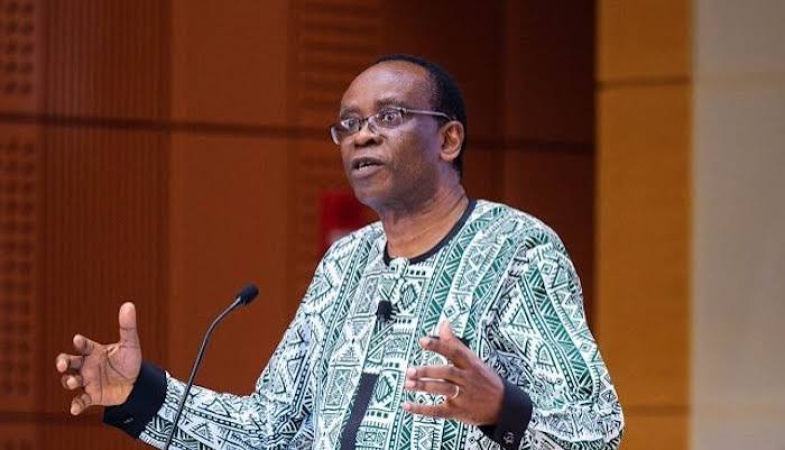
In 2023, a four-year investigation into oil pollution in Bayelsa State returned a verdict stark enough to make headlines worldwide: environmental genocide. Three years on, that verdict has changed little on the ground. According to Dr Nnimmo Bassey, Executive Director of the Health of Mother Earth Foundation (HOMEF), the pattern it describes is no longer confined to the Niger Delta.
A warning that has widened
Speaking on the sidelines of HOMEF’s School of Ecology programme in Lagos on Tuesday, Bassey said environmental degradation, long treated as a regional crisis specific to the Niger Delta, has become a growing national concern. He described the Niger Delta as a “poster child” of extreme extraction and environmental degradation, but warned that the underlying dynamic is now repeating wherever extractive industries expand without accountability. “Wherever you allow extraction and exploitation without responsibility, you are likely going to have zones that are sacrificed and people are disposed of as if they don’t matter,” he said.
The report that gave the crisis its name
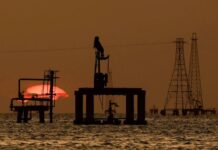
Bassey’s comments point directly back to An Environmental Genocide: Counting the Human and Environmental Cost of Oil in Bayelsa, Nigeria, a landmark 2023 report commissioned by the Bayelsa State Oil and Environmental Commission (BSOEC). The four-year investigation, chaired by John Sentamu, a member of Britain’s House of Lords and former Archbishop of York, found that Bayelsa, despite being one of Nigeria’s smallest and poorest states, accounts for roughly 18–20% of the country’s oil production and suffers a per-capita hydrocarbon pollution rate the commission described as among the worst on Earth. The report called the destruction so severe that “a state of emergency ought to have been declared immediately the findings were out,” and recommended two central remedies: a dedicated Bayelsa environmental recovery agency, and an international recovery fund of at least $12 billion, to be raised over 12 years from international oil companies, the Nigerian National Petroleum Corporation (NNPC) and other responsible parties.
Neither recommendation has been implemented. At the time of the report’s release, Shell told the AFP news agency it had not seen the findings and could not respond to its conclusions, while Eni said it had not been consulted and rejected the commission’s characterisation of the situation as “environmental racism.”
Three years of calls, little movement
The gap between recommendation and action has become its own recurring story. In June, stakeholders at a town hall meeting in Yenagoa, organised by the International Working Group on Petroleum Pollution and Just Transition, HOMEF and Social Action, marked three years since the report’s public presentation by renewing calls for its implementation. King Bubaraye Dakolo, Agada IV, Chairman of the Bayelsa State Traditional Rulers’ Council, who chaired the event, openly decried the continued non-implementation of the commission’s recommendations.
Read also: Nembe Creek Oil Spill Exposes Nigeria’s Recurring Accountability Gap
The human cost documented at these gatherings has sharpened over time. At a stakeholders’ forum in May, campaigners cited a toxicological audit that they said had uncovered a silent health crisis in rural, oil-bearing communities across Bayelsa, including elevated infant mortality, paediatric stunting, and life expectancy reduced to just 50 years. Professor Engobo Emeseh, of Aberystwyth University in the United Kingdom and a member of the International Working Group, said the BSOEC findings were severe enough to justify the report’s provocative title. Stakeholders at the forum called on the Bayelsa State Government to introduce annual medical check-ups for residents in high-exposure areas and expand healthcare access for those living with chronic oil-related illness.
Where cleanup efforts stand elsewhere in the Niger Delta
Bayelsa’s unimplemented recommendations sit alongside a longer-running, better-funded cleanup effort next door in Ogoniland, Rivers State, one that offers both a cautionary tale and a possible template.
The Hydrocarbon Pollution Remediation Project (HYPREP) was established by the Federal Government to implement the 2011 UNEP Environmental Assessment of Ogoniland, which identified 65 hydrocarbon-impacted sites and recommended an initial $1 billion intervention fund, financed jointly by the NNPC and international oil companies. Nenibarini Zabbey, HYPREP’s Project Coordinator, told the National Assembly in May that 17 contaminated sites have now been fully remediated and closed out, 13 more have undergone natural attenuation and been cleared by the National Oil Spill Detection and Response Agency (NOSDRA), and active remediation is under way at a further 17 medium-risk sites. In August, marking 15 years since the original UNEP report, HYPREP said it had also delivered potable water schemes, medical outreaches and mangrove restoration across the four affected Ogoni local government areas.
That progress has not gone unchallenged. An Associated Press investigation, citing leaked United Nations documents, reported that HYPREP had spent close to $1 billion with limited results to show for it, alleging that some cleanup contractors lacked relevant experience, that soil samples were sent to laboratories without the equipment to properly test them, and that auditors were at points physically blocked from verifying completed work. More than a decade into what was conceived as a 25-to-30-year project, communities in Gokana, Eleme, Khana and Tai local government areas are, by HYPREP’s own account, still waiting for the bulk of the restoration UNEP called urgent in 2011.
Read also: Ogoni cleanup under HYPREP has failed — MOSOP
Taken together, Ogoniland and Bayelsa illustrate two different stages of the same underlying problem. HYPREP shows that even a funded, government-mandated cleanup body can face serious accountability questions over more than a decade of operation. Bayelsa shows what happens before that stage is even reached, when a comparably damning report has secured neither dedicated funding nor an implementing agency, three years after publication.
A template, not an isolated case
Bassey’s warning this week reframes Bayelsa’s unresolved recovery fund not as an isolated grievance, but as a precedent other extraction-affected communities may be about to repeat. If a state producing a fifth of Nigeria’s crude output, with an internationally documented, government-commissioned case for $12 billion in remediation, cannot secure implementation three years on, the question Bassey raises is what chance newer, less-documented extraction zones have of securing accountability before their own damage compounds.
What remains unresolved
Three years after “An Environmental Genocide” was published, its two central demands, a dedicated recovery agency and a funded, multi-year clean-up plan, remain unrealised. Whether Bassey’s renewed national framing this week prompts a different response from federal authorities, or simply becomes the latest addition to a decade-spanning archive of reports and town halls that “brought the plight of the people of Bayelsa to the world’s attention but done little to fundamentally alter their situation,” in the commission’s own words, is now the test facing Nigeria’s environmental governance.