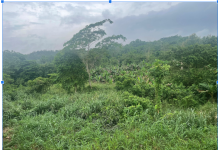
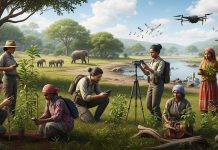
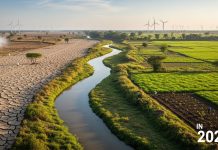
Volunteers in Gombe State on Wednesday began the planting of four million trees throughout the state to mitigate the menace of desertification.
The initiative tagged ‘Gombe Goes Green, 3G initiative’ was flagged of by the state governor, Inuwa Yahaya.
The governor noted at the flag off in Dukku Local Government Area of the state that over 86, 000 tree seedlings had been planted in nine local government areas and several nurseries established in various communities.
At the official flag-off of the Gombe Goes Green (3G) project today. Under the program, we are going to plant 4 million trees over the next 4 years, creating 27,000 jobs in the process. This will help combat desertification, deforestation, soil erosion and flooding.#SDGs#Gombepic.twitter.com/k4jNLS4ep5
He said deforestation, poor land use and other human activities were some of the major causes of flooding and erosion, which according to him, result in the destruction of agricultural lands, lives and properties of Gombe people.
He stated that the project demonstrated his administration’s commitment to addressing the myriad environmental challenges affecting the State.
“ Through 3G, we will continue to take necessary measures aimed at increasing the adaptive capacity toward reducing the negative impact of flood and erosion on the populace.
“ There will be awareness creation and sensitisation geared toward attitudinal change in relating with the environment; establishment of shelter belt, woodlots and cover crops to reduce impact of water runoff and loss of the top soil.
“Also, there will be campaign on reduction of drainage blockages; proper layout and planning of settlement that allows free flow of water along water ways; and construction of drainage.
“These efforts would help reduce vulnerability to these occurrences, ensure sustained food production and improve the socio-economic wellbeing of the people of Gombe State in the face of unceasing flood and erosion menace.
The governor emphasised that it was an obligation for everyone to give priority attention to, if we must halt desert encroachment and other environmental challenges facing us.
While acknowledging poverty as major reasons for environmental degradation, especially desertification which is largely caused by indiscriminate cutting of trees for firewood, he assured the people of assistance in that regard.
“We are already making concerted effort in seeking partnership with international donor agencies to provide affordable, alternative low energy cooking facilities that would reduce the pressure on our forest,” he said.
He added that the state government had recently paid N500 million as counterpart contribution to the World Bank to access funds for the gully erosions in two sites within Gombe Township.
He called on community leaders and individuals to support the Project in fighting the menace of desert encroachment and erosion by protecting the trees planted as well as planting more at every available space in their environment.
On his part, Alhaji Abdulkadir Rashid II, Emir of Dukku, thanked Gov. Yahaya and pledged his commitment towards ensuring the success of the project in his domain.
The United Nations Secretary-General António Guterres has said that there are tools to urgently combat climate change, if governments would just put in more political will.
Guterres made this call on twitter from Biarritz, France, where he has been meeting for the past two days with G7 leaders to mobilize action ahead of his Climate Action Summit next month in New York.
Speaking to reporters, Mr. Guterres said the UN Summit – and the need for concrete action – come against the backdrop of a “dramatic climate emergency,” with the UN World Meteorological Organization (WMO) reporting the 2015 to 2019 are on track to be the five hottest years ever recorded, and historically high concentrations of C02 in the atmosphere.
The G7 group of nations with partners at the Hotel du Palais Biarritz, the location of the G7 Summit in Biarritz, France. (25 August 2019 Photo:White House/Andrea Hanks
And with Greenland’s ice melting, and record-setting fires blazing from the Arctic to Alaska and the Amazon, the Secretary-General said, “we are much worse than what we were during Paris,” referring to the 2015 conference in the French capital that give birth to the landmark climate accord aimed at easing global warming and curbing greenhouse gas emissions.
He said that recent scientific evidence provided by the UN Intergovernmental Panel on Climate Change (IPCC) has made clear that “we absolutely need to keep the rise of temperature to 1.5 degrees Celsius to the end of the century and to be carbon neutral in 2050 and to have a 45 per cent reduction of emissions by 2030.”
I'm at the @G7 meeting in France because #ClimateAction cannot wait. People all over the world want a greener, cleaner and safer world. We have the tools to address the climate emergency, but we need more political will.
“And so, it’s absolutely essential that countries commit themselves to increase what was promised in Paris because what was promised [there] is not enough,” said Mr. Guterres, calling for more ambition and more commitment to that end.
The UN chief said society is mobilizing, as well as the world’s youth, “and we want to have countries coming to New York and being able to commit to be carbon neutral in 2050, being able to increase substantially their ambition in the Nationally Determined Contributions to climate action that have to be reviewed in 2020.”
Mr. Guterres also stressed the need to make sure that counties are “shifting of taxes from people to carbon,” ending subsidies to fossil fuels, and that more coal power plants are not built after 2020.
“All this requires a lot of political will, and the G7 was an excellent opportunity to appeal for the very strong engagement of the international community,” said the Secretary-General, adding that: “The youth have been leading the way, and we’ll start the Summit with a youth climate summit in the UN, but we need, especially those countries that belong to the G7, to give a positive example.”
Promoting citizen science is a rising global trend aimed at bridging the gap in environmental conservation. It is with this objective that the A. P Leventis Ornithological Research Institute (APLORI) through the Nigerian Bird Atlas Project (NiBAP) organised a one month Introductory Ornithology course in both Yankari Game Reserve, Bauchi state and Leventis farms, Weppa, Agenebode, Edo state.
This training was funded by National Geographic Society Grants, a total of 30 scientists (15 in Yankari and 15 in Weppa) from different parts of the country were trained in Field Ornithology, Introductory biostatistics (R statistical package), data collection and General Ecology.
The 26-day-training held in July was facilitated by professionals in the field from different parts of the country. Trainees carried out mini projects as a first-hand practice of all they had learnt during the course.
The expected outcome for the participants was a replication of these experiences in their local communities and this has been achieved with records of Bird clubs springing up across the nation in the last month.
These efforts are also contributing to the Nigerian Bird Atlas data which is a long-term project aimed at monitoring bird population in Nigeria.
The late Dr. Elizabeth Ehi-Ebewele, former deputy director and head of the Wildlife and CITES Management Division of the Department of Forestry in Nigeria, was on Tuesday honored posthumously for her groundbreaking role in combating wildlife crimes in Africa.
Ehi-Ebewele was honoured along with 11 others with the Clark R. Bavin Wildlife Law Enforcement Award at the 18th meeting of the Conference of the Parties (CoP) to the Convention on International Trade in Endangered Species of Wild Fauna and Flora (CITES) in Geneva.
The wildlife champion who passed away on February 8, 2019, was honoured for providing a solid foundation for Nigeria to reduce wildlife crime by bringing in a diverse group of stakeholders. She created Nigeria’s first national guidance on wildlife crime, after conducting a wildlife threat assessment analysis. She also helped develop West Africa’s strategy for combatting wildlife crime through a coordinated response from member countries of the Economic Community of West African States (ECOWAS).
Born Free USA’s Alice Stroud with Dr. Ehi-Ebewele Elizabeth. Photo: Born Free USA.
Underlining the importance of the award, the Animal Welfare Institute (AWI) said the award was presented to individuals, organisations and agencies that have demonstrated excellence in combatting wildlife crime.
“The importance of efforts to combat wildlife crime cannot be understated,” said AWI President Cathy Liss. “Those honored today for their superlative efforts, including 16 rangers who died in the line of duty, should be recognized worldwide for their dedication to saving the unique biodiversity of this planet from wildlife criminals who steal wildlife from all of us.”
#WildlifeLaw is critical in implementing stronger enforcement efforts against wildlife crime – Elizabeth Ehi-Ebewele of Nigeria pic.twitter.com/Quhr1mdrdo
— UN Environment Programme Asia Pacific (@UNEP_AsiaPac) July 4, 2017
Other recipients of the award are:
Ehi-Ebewele was honoured along with 11 others with the Clark R. Bavin Wildlife Law Enforcement Award
Limbe Wildlife Centre, Cameroon, for providing a safe haven and rehabilitation for seized wildlife, including thousands of parrots and hundreds of primates, and offering wildlife conservation education to thousands of children. The center also employs local families, including former hunters and poachers, who collect Aframomum, a type of wild ginger, and sell it to the center to feed the great apes under its care.
Vivek Menon, founder, trustee, executive director and CEO of Wildlife Trust of India, for a decades-long career training more than 20,000 wildlife enforcement officers in more than 50 countries; documenting, prioritizing and securing elephant corridors in India; setting up the country’s first wildlife rescue and rehabilitation center; and coordinating desnaring sweeps targeting poachers. One of the investigations Menon participated in led to the largest seizure of illegal tiger bones in Indian history and the disruption of several criminal syndicates. His textbook, “Wildlife Crime: An Enforcement Guide,” is required reading for all wildlife enforcement officers. Menon has contributed significantly to the work of CITES for the last 30 years, and spent much of his time as an advisor to the Indian delegation.
Rameshwar Singh Thakur, deputy director for intelligence and coordination for India’s Wildlife Crime Control Bureau, for his role in overseeing efforts by enforcement agencies to combat national and international organized wildlife crime. Thakur pursued the creation of a wildlife crime database that incorporates real-time data to help analyze crime trends and develop effective deterrents. This information has helped wildlife law enforcement, forest and police agencies throughout India create profiles for nearly 2,000 poachers. Thakur also has led or assisted with high-profile enforcement operations netting dozens of arrests and resulting in the seizure of tens of thousands of mongoose hairbrushes, thousands of live turtles, and hundreds of shahtoosh shawls, among other contraband.
Julius Kariuki Kimani (being honored posthumously), former director of Parks and Reserves for the Kenya Wildlife Service (KWS), for his decades of service improving inter-agency efforts to fight wildlife crime, raising awareness within Kenya’s judiciary about the importance of wildlife protection, and enhancing intelligence to identify wildlife criminals and gangs. Kimani began his career as an assistant warden with the Wildlife Conservation and Management Department in Kenya (the predecessor of KWS) and rose through the ranks to become director of parks and reserves. He was pivotal in securing the integrity of parks and their ecosystems in Kenya by improving industry governance and strengthening law enforcement linkages to enhance conservation.
Julius Maluki Mwandai, senior assistant director and head of investigations for the Kenya Wildlife Service, for mentoring thousands of wildlife law enforcement officers in Kenya and across Africa over several decades, transforming KWS’ paramilitary school into a distinguished regional wildlife law enforcement training institution, and demonstrating exemplary leadership in dramatically reducing rhino and elephant poaching in Kenya. Elephant poaching numbers in the country decreased from 384 in 2012 to 40 in 2018, and rhino poaching numbers decreased from 30 to 4 during the same period. In addition, nearly 10,000 wildlife criminals were arrested.
Lorena Alfonsina Fernández, attorney general for the environment in Honduras and secretary of the Central American Wildlife Enforcement Network, for leading numerous successful wildlife law enforcement operations; establishing national law enforcement networks that contributed to an increase in joint inspections, prosecuted cases and judicial decisions enforcing wildlife legislation; enhancing intelligence sharing; and improving training for law enforcement officers and members of the judiciary. Fernández supported the development of a wildlife enforcement app in cooperation with the United States, and oversaw a critical operation in Honduras targeting illegal timber traffickers.
Ross Galbraith, retired wildlife law enforcement officer for Environment Canada, for his tireless efforts over 20 years enforcing Canadian wildlife laws protecting fish, seabirds harmed by pollution, and other imperiled species, along with mentoring young officers and conducting enforcement training in Botswana. In 2009, Galbraith suffered a serious leg injury after a suspect ran him over while trying to escape. Although Galbraith was no longer able to do most physical fieldwork, he remained steadfast in the fight against wildlife crime. Since retiring in 2014, he helped create a charity, the International Society for the Advancement of Environmental Law Enforcement, to support wildlife officers and their families, particularly in developing countries, and was named the first civil society liaison to Interpol’s Wildlife Crime Working Group.
Josefina L. de Leon, former chief of the Wildlife Resources Division for the Department of Environment and Natural Resources in the Philippines, for her critical role in strengthening wildlife law enforcement in the Philippines. De Leon created the country’s Wildlife Law Enforcement Manual of Operations, which provides the standards and protocols for law enforcement officials to implement the wildlife laws of the Philippines, along with spearheading the development of the Wildlife Law Enforcement Action Plan 2018-2028, which serves as a framework to combat illegal activities against wildlife in the Philippines. De Leon also established the Operation Group on Ivory to investigate ivory smuggling incidents and to take legal action against the criminals involved. From 2010 to 2018, the Operation Group’s efforts led to a total of 230 multi-agency operations resulting in the confiscation of 36,000 specimens of both CITES and non-CITES listed species and the filing of 114 criminal complaints or cases.
PAMS Foundation and the late Wayne Lotter in Tanzania, for empowering individuals to protect wildlife and wild places. The foundation’s support for rangers and game scouts though anti-poaching training and aerial surveillance, and its collaboration with Tanzania’s National Task Force Anti-Poaching have significantly increased arrests and prosecutions of wildlife traffickers, including ivory trade kingpins “Shetani” Boniface Matthew Mariango and the “Queen of Ivory,” Yang Feng Glan. Lotter, one of PAMS’ co-founders and a prominent conservationist, was murdered in 2017 in Tanzania because of his anti-poaching efforts.
Anti-Smuggling Bureau of China Customs for coordinating recent groundbreaking, intelligence-driven investigations, in cooperation with other enforcement agencies and stakeholders. These efforts led to the arrest and prosecution of major wildlife traffickers, including key ivory traffickers and totoaba bladder smugglers. The illegal trade in totoaba is directly contributing to the precipitous decline in the vaquita porpoise population in the Upper Gulf of California; today, only about 10 vaquita remain on the planet. Since 2017, investigations by the bureau, involving hundreds of law enforcement officers, have resulted in the conviction and sentencing of nearly a dozen suspects and the disruption of two major wildlife trafficking networks.
Patrick Muhayirwa, Charles Syaira, Jonas Malyani, Pacifique Fikirini, Faustin Nzabakurikiza, Jean Byamungu, Barthelemie Mulewa, Théodore Prince, Liévin Kasumba, Kanawa Sibomana, Ila Muranda, Rachel Baraka, Kasereka Ezéchiel, Freddy Muliro, Hakizimana Chadrack, and Musubaho Maliro Antwi (being honored posthumously), former rangers at Virunga National Park in the Democratic Republic of the Congo, for making the ultimate sacrifice to protect wildlife. Wildlife rangers have one of the most dangerous jobs in the world as they pursue wildlife criminals in the city and in the field. Under often punishing conditions, rangers target those directly responsible for killing wildlife, along with the chain of people who pay, facilitate, authorize and ultimately profit from the crime. These 16 fallen rangers are among hundreds of wildlife law enforcement personnel across Africa who have lost their lives in the last three years in the line of duty.
Since 1997, 124 individuals and/or agencies from 38 countries have received the Clark R. Bavin Wildlife Law Enforcement Award, which is only given at CITES CoPs. This year, CITES Secretary-General Ivonne Higuero presented the award at a ceremony hosted by the Species Survival Network.
The award is named after the late chief of the U.S. Fish and Wildlife Service’s Office of Law Enforcement. Mr. Bavin substantially elevated the fight against wildlife crime in the United States and internationally, pioneering the use of covert investigations and sting operations to expose illegal wildlife trade and advocating for the use of forensic science to identify and prosecute wildlife criminals.
In what may be described as one of the most daring moves to save the Kenya northern white rhino species from extinction, veterinarians and wildlife experts successfully extracted eggs from the last two surviving female.
The eggs will be fertilised with stored sperm and incubated in a surrogate southern white rhino female.
The procedure was carried out Thursday on the last known living northern white rhinos — Najin and Fatu — who are infertile. Ten eggs, five from each, was harvested.
The feat was a joint effort of the Leibniz Institute for Zoo and Wildlife Research, Avantea, Dvur Králové Zoo, Ol Pejeta Conservancy and the Kenya Wildlife Service (KWS).
“We are very happy that after this first procedure on Najin and Fatu that they have recovered very smoothly and they are doing really well and fine today just 24 hours after this first procedure,” said Dr. Robert Hermes, of the Leibniz Institute for Zoo and Wildlife Research.
The world’s last male northern white rhino, Sudan, which was in the center of frantic conservation efforts died in March 2018. Sudan’s death shifted conservation focus to his stored semen and that of four other dead rhinos along with Najin and Fatu who are now constantly under the protection of armed guards.
The ultimate goal is to create a herd of five to 15 animals that would be returned to their natural habitat in Africa. That could take decades.
Sudan got its name from its country of birth as the last of its kind to be born in the wild. It was taken to the Czech zoo and then transferred to Kenya in 2009, along with the only other remaining northern white rhinos, the two females and a male who died in 2014.
They were placed under 24-hour armed guard and fed a special diet. However, despite the fact that they were seen mating, there were no successful pregnancies.
After the elephant, rhinoceros is the second largest land mammal. The white rhinoceros consists of two sub-species – the southern white rhino and the critically endangered northern white rhino.
Loss of habitat and poaching (for horns) are the leading sources of danger to species.
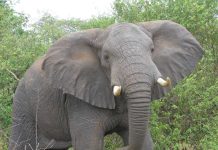
Yankari Game Reserve, home to Nigeria’s largest remaining elephant population, has experienced zero poaching in the last four years, the Wildlife Conservation Society (WCS) has reported.
The announcement was made just days before officials gather for the meeting of CITES, the Convention on International Trade in Endangered Species. The success underscores the importance of tightening up the closure of importing countries’ domestic ivory markets, along with vigilant anti-poaching and anti-trafficking efforts.
No elephants killed in 4 years is remarkable. Well done Yankari's dedicated rangers! Thanks to all supporters who helped @TheWCS stop elephant poaching in Yankari Game Reserve. Now we need to ensure full recovery by maintaining current levels of protection. pic.twitter.com/DpcbPSgPps
WCS, which helps manage the protected area, attributes the success to well-managed, well-equipped and highly trained rangers who patrol the 866 square miles (2,244 square kilometers) reserve, which also supports important populations of lion, buffalo, hippo, roan and hartebeest.
Yankari’s elephant population remains stable at 100-150 individuals, and is expected to grow in the coming years if conservationists remain steadfast in keeping poachers out of the reserve. As recently as 2006 there were as many as 350 elephants in Yankari, but a period of heavy poaching from 2006 to 2014 reduced their numbers dramatically. Since 2014 Yankari has been managed through a co-management agreement between Bauchi State Government and WCS.
Yankari’s elephant population remains stable at 100-150 individuals photo: WCS Nigeria
Elephants are critically endangered in Nigeria, with the Yankari elephants being the only savanna elephants remaining in the country. Some forest elephants also still remain in low numbers in the forested south including Cross River National Park area (where WCS is also working to secure forest elephants and the Cross River Gorilla). Historically the Yankari savanna elephants may have been ecologically connected with the Sambisa area (impacted by Boko Haram) and perhaps also Gashaka Gumti National Park and neighboring areas of Cameroon. This is a core critical area for elephant conservation in the Sudano-Sahel Region.
Originally created as a game reserve in 1956, Yankari was upgraded to a national park in 1991. It was managed by the National Parks Service until 2006 when responsibility for the management of the reserve was handed back to Bauchi State Government. Since then tourism infrastructure has been dramatically improved. Yankari is now one of the most popular tourism destinations in Nigeria.
“Rangers are the key to stopping poaching in protected areas” said Andrew Dunn,WCS Nigeria Program Director “Yankari is an amazing success story and shows the world that with targeted use of limited funds, and government commitment, progress can still be made provided that rangers are properly trained and supervised.”
Rangers are the key to stopping poaching in protected areas photo: Natalie Ingel/WCS Nigeria
Dunn attributes the success in the reserve to several factors. The leadership of Nachamada Geoffrey, Director of the Yankari Landscape for WCS, directs efforts to ensure a zero tolerance policy for corruption coupled with making sure all rangers are well-equipped in the field and trained with regular refresher courses. SMART (Spatial Monitoring and Supporting Tool) together with real time radio communications is used help guide and monitor the rangers and optimize their impact.WCS supplements rangers’ incomes with additional monies per night as an incentive whenever they are on a long-distance foot patrol.
Nachamada Geoffrey stated, “Solid logistical support (food rations), equipment, and motivation through regular salary payments support our ranger operations day in and day out. Most of the rangers are recruited from the local community and are highly motivated to protect the wildlife of Yankari.”
David Adejo Andrew of Nigeria’s Federal Department of Forestry and Federal Ministry of Environment also commended WCS’s efforts.
“The efforts of the WCS in conserving the largest pool of elephant populations at the Yankari Game Reserve has given Nigeria a good platform for conserving other Elephant population in the country. This has encouraged the Nigerian Government to work with the WCS to translate this success stories to other areas,” he said.
The future outlook
Of course in the long-term Yankari will only survive if it has the support of the surrounding communities. Yankari is one of the main sources of employment locally, including both rangers, hotel staff and elephant guardians. WCS is also working with local schools to help develop future conservation leaders. In addition, WCS has helped establish an informant network among the communities surrounding the reserve that provides critical information on poachers.
Building on this foundation and work ethic, significantly more resources are urgently needed to fully establish the Reserves full management systems and effectiveness.
WCS’s conservation efforts within Yankari are supported by the Bauchi State Government, United States Fish and Wildlife Service, Embassy of France in Nigeria, Australian High Commission in Nigeria, Tusk Trust, the North Carolina Zoological Society, Omaha’s Henry Doorly Zoo and Aquarium, CITES-MIKE, the UNEP African Elephant Fund, the A.P. Leventis Conservation Foundation, the Lion Recovery Fund—an initiative of the Wildlife Conservation Network in partnership with the Leonardo DiCaprio Foundation, and the Elephant Crisis Fund—a joint initiative between Save The Elephants and the Wildlife Conservation Network, in partnership with the Leonardo DiCaprio Foundation.
The Amazon rainforest is the largest in the world also housing most of the worlds species — flora and fauna. It accounts for more than half of the volume of remaining rainforests on earth and is credited with generating more than 20 percent of the oxygen used all over the world.
For about three weeks now, wildfires have been clearing out swathes of land in the Amazon and it is alarming. Environmental organisations and researchers are accusing cattle ranchers and loggers who want to clear and utilize the land for the unprecedented destruction. The environmentalists claim that the ranchers and loggers are emboldened by Brazil’s pro-business president, Jair Bolsonaro.
I’m deeply concerned by the fires in the Amazon rainforest. In the midst of the global climate crisis, we cannot afford more damage to a major source of oxygen and biodiversity.
Brazil is home to about 60 percent of the Amazonia, while Peru, Colombia, Venezuela, Ecuador, Bolivia, Guyana, Suriname and French Guiana house what is left of the 5,500,000 km² forest. The Amazonia is a bulwark of conservation and one of the last line of defence against global warming. The forest is a major greenhouse gases sink.
The Fires Are Raging and The Amazonia continues to burn………This is a devastation to Brazil—to the indigenous people who live there and the-plant and animal species that make this the most important bio-diverse Forest!!! President Bolsonaro please… https://t.co/YbxldYw8HYpic.twitter.com/lex4UIwHcg
If the forest is lost to these wildfires, about 2.5 million insect species, at least 40,000 plant species, 2,200 fishes, 1,294 birds, 427 mammals, 428 amphibians, and 378 reptiles which have been scientifically classified in the region may be lost forever.
RT @SDG2030: "We're losing species we do not even know exist."
— FAO Climate Change & Biodiversity (@FAOclimate) August 23, 2019
“The vast majority of these fires are human-lit,” said Christian Poirier, the program director of non-profit organization Amazon Watch. He added that even during dry seasons, the Amazon — a humid rainforest — doesn’t catch on fire easily, unlike the dry bushland in California or Australia.
The French president, Emmanuel Macron described the wildfires as “international crisis” , calling on the G7 to make the issue a top priority at its summit.
Our house is burning. Literally. The Amazon rain forest – the lungs which produces 20% of our planet’s oxygen – is on fire. It is an international crisis. Members of the G7 Summit, let's discuss this emergency first order in two days! #ActForTheAmazonpic.twitter.com/dogOJj9big
According to satellite imagery reports from Brazil’s National Institute of Space Research (INPE), there have been 74,155 fires in the Amazon since the beginning of the year 2019 so far, representing an 84 per cent increase from the same period last year.
Meanwhile, President Bolsonaro is counter-accusing the Environmental organisations of been responsible for the fires.
“Maybe – I am not affirming it – these (NGO people) are carrying out some criminal actions to draw attention against me, against the government of Brazil,” Bolsonaro told reporters in Brasília, the capital of Brazil.
“It could be ranchers. Everyone is suspicious, but the biggest suspicion comes from NGOs.”
He expressed suspicion that the NGOs are trying to make him look bad because they have lost funding since he became president.
Climate change is a global emergency. Bolsonaro and his corporate cronies are burning the Amazon rainforest for personal profit and jeopardizing our planet's survival.
Countries should be strengthening their laws protecting endangered species, not weakening them, international conservationists said Tuesday, after US President Donald Trump”s administration announced plans to alter the country”s Endangered Species Act.
Amid growing global alarm over the accelerating pace of species extinction, leading figures from the Convention on International Trade in Endangered Species (CITES) called for stronger protections of animals and plants under threat.
“Parties are all encouraged to strengthen their wildlife laws. We need more tight wildlife laws, not to weaken them,” Juan Carlos Vasquez, head of legal affairs and compliance regulatory services at CITES, told reporters in Geneva.
His comment came after the Trump administration on Monday announced changes to the Endangered Species Act, which critics warned could dramatically weaken the legislation credited with saving the grey wolf, bald eagle and grizzly bear.
Neither Vasquez nor CITES Secretary General Ivonne Higuero wanted to comment on the specific impact of the changes, saying they had yet to see the details and that any analysis was “premature”.
CITES, which regulates international trade in over 35,000 species of plants and animals, has a compliance mechanism that allows it to push through sanctions on countries that fail to follow the rules.
Higuero stressed that the announced US changes may not fall under the CITES convention, which only covers endangered species subjected to international trade, or listed as so threatened that trade is banned or very closely controlled.
If the changes do impact any of the species on the most-endangered lists, “of course the convention would have to take some steps,” she told reporters.
She said there was currently widespread concern “about what is happening with the extinction of species”, following a UN report in May indicating that one million species are rapidly being pushed to the brink of extinction.
She was speaking ahead of a meeting of the 183 parties to CITES, scheduled to kick off in Geneva on Saturday.
The dangers of illegal trade and the plight of Africa”s rhino, elephants and giraffes were among a long line of issues to be discussed.
Governments have submitted 56 new proposals to change the levels of protection that the convention provides for various species of wild animals and plants.
On Wednesday 31st July, 2019, millions of people worldwide joined in celebrating rangers. Many organised special events, some organised photo sessions while others only gave the rangers a shout-out on the social media.
In Omo wildlife reserve, Ogun State, Nigeria the World Rangers day was celebrated with a modest event spiced by news of the birth of twins by the wife of one of their colleagues.
Researcher Stella Iruoje delivers opening address at World Rangers Day 2019
As part of the event, the rangers had quizzes and talked about their work as rangers. The event was capped with eating, drinking and dancing at the Erin Camp, deep in the heart of the forest.
Below are photos from the event.
Rangers and community scouts at the 2019 World Rangers Day in Omo, Ogun State
Conservationists have called for the regulation of shark harvesting globally to avoid driving the species in to extinction. They point out also that contribution of live sharks to the ecosystem as a whole is invaluable and far outweighs the satisfaction a select few get from a bowl of soup in restaurants in the Far East, hence the need to protect the species from extinction.
Conservationists made the call at the kick off of the 2019 edition of the Dubai Shark Week on Sunday.
According to the experts, as many as 100 million sharks are gruesomely killed globally every year for their dorsal fins. Once the fin is sliced off, the poor animal is discarded into the ocean to bleed to death.
Unless countries come together to stem this animal cruelty, sharks will eventually become extinct, conservationists said during the start of the event organised by the Ministry of Climate Change and Environment (MOCCAE), International Fund for Animal Welfare (IFAW) and Atlantis, The Palm, in Dubai. The event coincides with Discovery Channel’s Shark Week.
“The destination is the Far East, in China, Hong Kong, Singapore, and other parts of Asia,” Dr Elsayed Ahmad Mohammad, regional director, Mena, International Fund for Animal Welfare (IFAW), said, adding the need to regulate harvesting of shark fins is critical.
Sharks are apex predators and are on the top of the food chain. Decreasing shark population could throw the ecosystem out of balance. On top of their value in the ecosystem, they also give more value to humans.
“We want people to know the value of sharks. There’s a study about the value of a shark in attracting tourists. The value is more than $100,000 (N36,000,000) a year for ecotourism. This in turn helps the economy,” Dr Mohammad sad.
Another study said shark ecotourism could generate more than $314 million annually worldwide.
Compare this with a delicacy sold in the market for a few hundreds of dollars, with the average of about $450.
Dr Elsayed said another gap in the conservation measures is people who consume the shark fin soup are usually “unaware of the problem of how the fins were harvested in the country of origin”. But a number of non-government organisations area already working in China to educate patrons and reduce the demand for shark fins.
Hiba Al Shehhi, acting director of Biodiversity Department, Ministry of Climate Change and Environment (MOCCE), strongly emphasised that “no shark fins” are supplied from UAE waters to the Far East.
This is because of the number of legislations and existing National Action Plan to protect the species.
But Al Shehhi said that sharks in the UAE are also in critical number and populations are yet to recover.
“In a study in 2016, the ministry found out that almost 50 per cent of the sharks in the Arabian Gulf is threatened. Twenty-two per cent of them are critically threatened and three per cent are already extinct. When we saw the status of the sharks, we said we have to do something,” Al Shehhi said.
Mike Rutzen, shark behaviourist and conservationist from South Africa and speaker at the conference, said global shark populations are dwindling as well and if nothing is done about it, it may be too late.
“Unfortunately, we are now at a crossroads. The world population of sharks is at a point where if we don’t do anything about it, all of them will go extinct — not just one population of shark — because of poaching and illegal trade,” he said.