











Home Blog

Nigeria’s last elephants wrestle for survival in forgotten reserve as Omo Forest suffers neglect

0

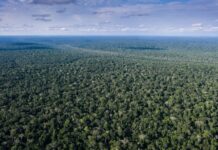
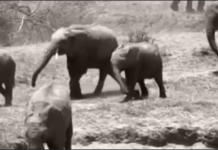
At dawn, the Omo Forest comes alive with a cacophony of whispers. Giant mahogany trees are blurred into a soft cloak of mist, with the melody of chirping birds emerging from the morning fog. Somewhere deep in the forest, some of the last herd of elephants in southwestern Nigeria quietly map the damp soil with their feet.

But the calm is deceptive. Omo Forest Reserve, a 1,305-square-kilometer protected area in Ogun State, is under siege. Chainsaws snarl in the distance. Cocoa farms spread like wounds through the undergrowth. Timber trucks rumble down bush paths carved illegally into the reserve. And poachers, emboldened by weak enforcement, leave behind snares, gun shells, and fear.

Here, Nigeria’s last forest elephants are forced to the brink.

Amid this crisis stands one man, Emmanuel Olabode, a conservationist whose life has become entwined with the fate of these elephants. For nearly a decade, he has walked the forest, tracked the animals, recruited rangers, and tried to reconcile communities with conservation.

Olabode Emmanuel, one of Nigeria's most outspoken rangers
Olabode Emmanuel, one of Nigeria’s most outspoken rangers

The ranger who cares 

“When I first heard about elephants in Omo, I didn’t know they were so close to Lagos,” Olabode recalled, his voice carrying both awe and disbelief. “It took months of following footprints, droppings, broken branches, signs everywhere, but no actual sighting. When I finally saw them, it was one of the most intriguing moments of my life.”

As project manager of the Forest Elephant Initiative at the Nigerian Conservation Foundation, Olabode leads a small team of 12 rangers tasked with protecting Omo’s fragile wildlife.

“We use the elephants as a flagship species,” he explained. “If we can save them, we can save everything else here, chimpanzees, monkeys, birds, even the trees themselves.”

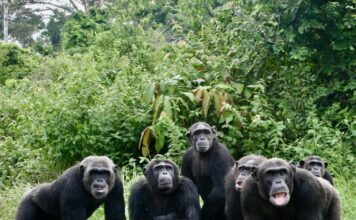
But elephants are only a part of the story. Omo shelters over 200 tree species and more than 100 types of mammals and birds, from the rare Nigeria-Cameroon chimpanzee to the endemic white-throated guenon monkey. Each faces the same fate: survival or vanishing, determined by how quickly the destruction of Omo is curbed.

“Biodiversity is a critical part of our work,” Olabode explained. “We are losing species that once defined this forest. Some are so rare now that even researchers spend years without spotting them.”

A forest under siege

Driving into Omo Forest is like stepping into two colliding worlds. On one hand, towering rainforest trees soar above all else, their buttresses anchoring the soil. On the other hand, yearning gaps reveal scars of human invasion, fresh tree stumps, charred earth from slash-and-burn farming, and makeshift camps of loggers.

loggers in the Omo reserve

Officially, Omo is designated a Strict Nature Reserve, a classification that should bar extractive activities. In reality, illegal timber harvesting and subsistence farming flourish, threatening the integrity of the forest. Over the years, seven percent of its tree cover has been lost,  a number that underestimates the intensity of ongoing degradation.

Olabode’s rangers routinely encounter poachers and illegal loggers, sometimes armed and aggressive. “It is dangerous work,” he admitted. “Some of them will attack anything that comes their way. We also deal with human-wildlife conflicts when elephants raid farms or when farmers encroach deeper into elephant habitat. Every day is a struggle.”

The risks are compounded by the terrain itself: rangers trek for hours through rivers, hills, and thick undergrowth, often in torrential rains. “This is not like working in a zoo where animals are behind fences,” Olabode said. “Here, we share the same space with them.”

Turning poachers into protectors

Perhaps the most striking shift in Omo’s story lies in the men who once hunted its wildlife but now stand guard over it.

For instance, Gbenga Ogunwole, a wiry man with a ready smile, hitherto spent years hunting antelope and monkeys to feed his family. Today, dressed in a faded ranger’s uniform, he patrols the forest alongside Olabode.

“World Ranger Day is meaningful to me,” Ogunwole said. “Before, I was part of the problem. Now I’m part of the solution. People now recognise our work — to protect nature instead of destroy it.”

By recruiting former hunters as rangers, the Forest Elephant Initiative not only reduces poaching but also integrates local knowledge of animal behaviour and forest navigation into conservation. This approach has also improved relations with nearby communities, who once saw rangers as outsiders threatening their livelihoods.

“We regularly visit villages, talk to people about why conservation matters — not just for animals, but for human life,” Olabode explained. “When they see their own brothers wearing the ranger uniform, it changes the narrative.”

Between Farmers, Loggers & Elephants

Still, the battle for Omo is as much economic as it is ecological. Farmers cultivate cassava and cocoa deep inside the reserve, while loggers, some backed by powerful syndicates, target prized hardwoods like mahogany. Both groups argue they rely on the forest to survive.

“Everybody claims the forest is theirs,” Olabode said. “The farmers say they must feed their families, the loggers say they need timber for their business. But where do the elephants go if we lose the forest?”

The result is frequent tension. Rangers are caught in the middle, enforcing conservation laws that are often undermined by weak prosecution and political interference. Arrested loggers or poachers sometimes walk free, eroding ranger morale.

“Our work will only succeed if policies are enforced,” Olabode insisted. “If offenders are arrested and prosecuted, it will deter others. Right now, too many cases end with nothing.”

The farmers’ perspective is layered

In J4, a settlement inside the reserve, cocoa trees line the forest edges in neat, cultivated rows. For thousands of farmers, cocoa is life.

Akeji Femi, former public relations officer of the Association of Cocoa Farmers in J4, has lived here since 1995.

“There had been no incident of elephants attacking humans,” he said. “There was already cocoa farming by the time I got here.”

Akeji Femi, a former Public Relations Officer of the Association of Cocoa Farmers

Akeji Femi, a former Public Relations Officer of the Association of Cocoa Farmers


For Femi, farming in the reserve is not theft but survival. He described a system where farmers, many of them migrants, pay multiple levies to gain access to farmland.

“We pay money to different community chiefs to get land. In 1995, we paid N5,000. Now, in 2025, it is N100,000. Then we pay to government more than N13,000 per tonne of cocoa. We pay the state Ministry of Agriculture. Most of us are visitors in these communities. We don’t fight for land. We stay where we are given.”

We pay money to different community chiefs to get land. In 1995, we paid N5,000...
We pay money to different community chiefs to get land. In 1995, we paid N5,000…

For him, the solution lies not in conflict but in clearer land use policies. “What I recommend is for the government to give us a portion to do cocoa farming, while they can also set another part for forest preservation,” he said. “We know there are parts set for the elephants which we don’t go to.”

on paper, zoning sounds good

On paper, this sounds simple: zoning the forest to balance agriculture with conservation.

In reality, blurred boundaries, weak enforcement, and political interests make it far messier. Farmers often find themselves encroaching into restricted zones either knowingly or unknowingly, while rangers struggle to enforce rules without appearing hostile to communities who feel they have paid their dues.

But while cocoa farmers defend their presence, others accuse them of being a greater threat to the forest than anyone else.

Odunayo Ogunjobi, a timber contractor licensed by the Ogun State Ministry of Forestry, has watched with alarm as swathes of economic trees are felled to make way for cocoa plantations.

“The government generates as much as over N8 million from me alone,” Ogunjobi said, “excluding the other indirect workers who depend on me. But illegal cocoa farmers are destroying the forest. They cut down valuable economic trees in Omo’s J4 area just to pave way for cocoa farms.”

Odunayo Ogunjobi

Odunayo Ogunjobi

He recalled that during the administration of former governor  Gbenga Daniel, illegal farmers were expelled from forest reserves across the state. “As soon as Daniel left office in 2011, they all returned and increased in numbers,” he said, his frustration clear. “Now they pose a great threat to the security and economy of the state.”

For Ogunjobi and other contractors, the issue is not just about wildlife, but also about the sustainability of the timber industry itself.

 “We are struggling to get timbers because most of the illegal contractors are taking over everywhere,” he said. “We generate a lot of revenue for the government, but no one seems to be listening to our cry. No one is monitoring the forest. At this rate, in the next two or three years, the trees or forests will go extinct.”

 Paper trail 

Evidence of the state’s deep financial entanglement in the forest economy is captured in a document pinned on a wall at Area J4: “OGUN STATE FORESTRY PLANTATION PROJECT, AREA J4. PROJECT ACCOUNT NUMBERS FOR CONTRACTORS”.

The notice lists official bank accounts for payments tied to different forestry activities: Eco Bank 5452011799 – for Gmelina exploitation; Eco Bank 5452011782 – for 25% FTF (Forestry Timber Fee); Wema Bank 0120291519 – demarcation amount of N20,000 and Wema Bank 0120291935 – a non-refundable amount of N50,000.

The structured fees, covering exploitation, levies, demarcation, and administrative charges, reveal how forestry exploitation is not only permitted but institutionalised by the state. Contractors, like Ogunjobi, pay millions into these accounts. But cocoa farmers also pay chiefs, ministries, and additional levies, creating a dual system of extraction.

This fragmentation of authority means that while the state can claim legitimacy through bank receipts, farmers can also claim legitimacy through receipts from chiefs and agricultural ministries. The result is overlapping rights and competing claims to the same forest — a recipe for conflict and unsustainable exploitation.

The Global Ranger Crisis

Omo’s challenges mirror a larger crisis across Africa. With human populations expanding and forests shrinking, rangers are the thin green line between survival and extinction for countless species.

“Rangers are nature’s first line of defense,” said Linus Unah, West Africa Director for Wild Africa. “Without them, our iconic wildlife like lions, elephants, and gorillas could disappear forever.”

Linus Unah, West Africa Director for Wild AfricaThe human cost of conservation

Yet, beneath the passion lies sacrifice. Rangers spend weeks away from their families, exposed to harsh weather, loneliness, and sometimes hostility from their own communities.


“Some rangers are ostracised because they arrest neighbours or relatives involved in illegal activities,” Unah explained. “It takes resilience and dedication.”

Globally, the mental toll of ranger work is only beginning to be recognised. Exposure to violence, animal attacks, and isolation often leads to trauma. Without support systems, many rangers suffer in silence.


“People celebrate us once a year on World Ranger Day,” said Ogunwole, the former hunter. “But for us, every day is ranger day. We wake up not knowing what we will face.”


Yet, rangers remain under-resourced. Globally, there are an estimated 280,000 rangers, a fraction of the 1.5 million needed to protect 30 percent of the planet’s land and sea by 2030. Between 2006 and 2021, more than 2,300 rangers died on duty worldwide, 42 percent from criminal activity linked to wildlife crime.


For Omo’s team, the lack of insurance, medical care, and protective equipment compounds the dangers. “Rangers also have families, they have dependents,” Olabode said. “They deserve life insurance, healthcare, and proper motivation. Without that, the risks are enormous.”

The human cost of conservation

Yet, beneath the passion lies sacrifice. Rangers spend weeks away from their families, exposed to harsh weather, loneliness, and sometimes hostility from their own communities.

Rangers spend weeks away from their families, exposed to harsh weather, loneliness, and sometimes hostility from their own communities.

“Some rangers are ostracised because they arrest neighbours or relatives involved in illegal activities,” Unah explained. “It takes resilience and dedication.”

Globally, the mental toll of ranger work is only beginning to be recognised. Exposure to violence, animal attacks, and isolation often leads to trauma. Without support systems, many rangers suffer in silence.


“People celebrate us once a year on World Ranger Day,” said Ogunwole, the former hunter. “But for us, every day is ranger day. We wake up not knowing what we will face.”

Nigeria’s Forgotten Elephants

Elephants once roamed widely across Nigeria. Today, fewer than 400 are thought to remain in scattered pockets across the country, from Yankari Game Reserve in Bauchi to Okomu National Park in Edo. Omo Forest may hold fewer than 100, perhaps Nigeria’s last viable forest elephant population.

Forest elephants play a critical ecological role. By feeding on fruits and trampling vegetation, they disperse seeds and open pathways that allow forests to regenerate. Scientists call them “gardeners of the forest.” Losing them would unravel Omo’s ecological fabric.

But Nigeria’s elephants have long been neglected in conservation planning. International headlines often spotlight East Africa’s savannah giants, while their forest cousins fade in obscurity. For Olabode, this invisibility makes the struggle harder.

“If elephants disappear from Omo, Lagos will be the only megacity in the world with elephants at its doorstep that failed to protect them,” he said quietly.

A ray of hope

Despite the odds, Olabode insists the fight is not a losing battle. Awareness campaigns have begun to shift community attitudes, and government officials have shown renewed interest in supporting conservation.

“We are making progress, even if it is slow,” he said. “With government support and stakeholder collaboration, we can secure this forest.”

Wild Africa, alongside Nigerian Conservation Foundation, is pushing for stronger laws, ranger support, and integration of conservation into national planning. “It requires political will,” Olabode stressed. “Government must act before it is too late.”

For rangers like Odamo Yemi, the work is deeply personal. “I love to protect nature, and I love to watch animal behaviour,” he said. “Even if it is risky, it is worth it.”

What is at stake

The fate of Omo’s elephants is not just about wildlife. The forest provides clean water, carbon storage, and climate resilience for millions in southwestern Nigeria. Its loss would accelerate flooding, soil erosion, and heat extremes in a region already grappling with climate shocks.

“Protecting elephants means protecting people too,” Olabode said. “If the forest is gone, where will we go?”

As dusk settles over Omo, the forest hums with cicadas and distant birdcalls. Somewhere in the shadows, the elephants move quietly, their survival balanced precariously between conservation efforts and human pressures.

For now, the rangers keep watch, weary but undeterred. Their fight is for elephants, for Omo, and for a future where Nigeria’s last giants are not forgotten.


This article was produced in partnership with Wild Africa. It was first published on www.businessday.ng

Community-Led, Technology-Powered Conservation: Paving the Way for a Resilient Planet

0

Across the globe, conservation is no longer solely the domain of governments or large NGOs. Today, local communities, equipped with knowledge, technology, and the right support-are leading the charge to protect ecosystems, wildlife, and natural resources. From Africa to Asia, Latin America, and North America, the evidence is clear: when communities are empowered, biodiversity thrives, livelihoods improve, and climate resilience grows.

Why Community-Led Conservation Works

Local Knowledge Meets Science: Communities living alongside forests, rivers, and wildlife possess intimate knowledge of seasonal patterns, animal behavior, and ecosystem dynamics. Integrating this knowledge with modern technology-drones, AI monitoring, remote sensing, and blockchain-creates a powerful toolkit for conservation. For example, Mongolian herders now track snow leopards in real time using GPS collars and AI alerts, reducing human-wildlife conflict while protecting endangered species.

Accountability and Ownership: Conservation succeeds when communities feel ownership. Transparent systems, such as blockchain tracking for forest carbon projects in Indonesia or sustainable fisheries in Africa, ensure that funding reaches its intended purpose and that poaching or illegal logging is minimized. Local oversight naturally increases accountability, cutting corruption and misuse of resources.

Co-Benefits Beyond Nature: Conservation is most effective when it delivers tangible benefits to local people. Eco-tourism, sustainable agriculture, renewable energy projects, and reforestation programs generate jobs, increase food security, and strengthen resilience against climate extremes. In Namibia and Kenya, community conservancies have simultaneously boosted wildlife populations, cultural preservation, and economic well-being.

Global Success Stories

  • Indonesia: Women-led mangrove restoration initiatives protect coastlines while creating sustainable livelihoods for hundreds of families.

  • Vietnam: Ethnic community forest cooperatives have improved tiger and elephant survival rates while increasing income from eco-certified products.

  • United States: Community watershed groups restore post-wildfire landscapes, combining volunteer action with local government support to rehabilitate habitats.

  • Africa: Namibia’s conservancies have quadrupled wildlife numbers while generating tourism revenue and supporting poverty reduction. Kenya’s Wildlife Guardianship programs empower local people as stewards of biodiversity.

These examples demonstrate that scalable impact is achievable when communities are trusted, empowered, and provided with the right tools.

The Role of Technology

Technology improves community capacity rather than replacing it. Satellite imagery, AI, and drones allow communities to detect deforestation, monitor endangered species, and respond rapidly to threats. Mobile and citizen science platforms enable real-time data collection and empower local stakeholders to contribute directly to conservation planning. This combination of indigenous knowledge and high-tech tools forms the backbone of resilient, adaptive ecosystems.

Challenges to Overcome

Despite success stories, barriers remain. Steady financing, secure land and usage rights, and capacity-building for technology adoption are still limited in many regions. Scaling effective community-led models requires robust governance, legal frameworks, and long-term commitment. Without these, conservation initiatives risk faltering or being captured by external interests.

Looking Ahead: Opportunities for 2026

To expand the impact of community-led conservation in 2026, the following strategies are crucial:

  1. Prioritize Rights-Based Conservation: Ensure funding and policies strengthen local stewardship, respect land rights, and empower communities to lead.

  2. Scale Technology Access: Broaden the use of AI, drones, blockchain, and mobile monitoring, making these tools available even to remote areas.

  3. Integrate Community Voices into Policy: Global and national forums must embed local knowledge and priorities in conservation strategies.

  4. Promote Cross-Regional Knowledge Sharing: Lessons from Asia, Africa, and the Americas can inform new initiatives, accelerating success and avoiding repeated mistakes.

Conclusion

The evidence is clear: when local communities lead, equipped with knowledge and technology, conservation succeeds. It protects species, restores landscapes, strengthens resilience, and benefits people economically and socially. In 2026, the global conservation community has the opportunity to invest, scale, and mainstream these approaches, transforming nature protection from an isolated effort into a global movement rooted in empowerment, collaboration, and sustainable impact.

Looking Back at 2025: The Big Environmental Emergencies and How We Can Turn the Tide in 2026

0

As we near the end of 2025, the world finds itself grappling with a cascade of pressing environmental, wildlife, climate, and conservation problems. These are interconnected, accelerating one another, and presenting deep risks for people and ecosystems. Below are some of the most urgent fronts, along with how we might start fixing them in 2026.

1. Climate Change & Global Warming

Extreme weather events: severe floods, droughts, wildfires, and hurricanes continue to intensify as global temperatures rise. The Global Risks Report 2025 places “extreme weather events” and “biodiversity loss & ecosystem collapse” among the top dangers the world faces over the next decade. 

In Africa, particularly in the Horn, prolonged droughts and erratic rains are threatening water and food security. Communities dependent on farming are increasingly vulnerable to climate shocks and livelihood loss.

How to combat in 2026: Prioritise investment in resilient infrastructure (drought-proof crops, flood defences, early-warning systems). Scale up climate adaptation funding, especially in Africa. Support community-based disaster planning and ecosystem restoration (wetlands, forests) to buffer shocks.

2. Biodiversity Loss

The evidence is stark: across terrestrial, freshwater, and marine ecosystems, human activities are eroding biodiversity at a dramatic pace. For instance, a study found that species-rich sites impacted by humans had, on average, 20% fewer species than less-impacted sites.

Loss of biodiversity matters for food security, medicine, ecosystem services, and human well-being

How to combat in 2026: Strengthen networks of protected areas; enforce anti-poaching and habitat-protection laws; invest in large-scale habitat restoration (including corridors linking habitats); and empower indigenous and local communities as stewards of biodiversity.

3. Deforestation

Deforestation remains a stubborn global challenge. According to the Forest Declaration Assessment 2025, 8.1 million ha of forest were lost in 2024 alone-63% higher than the pace required to meet the 2030 goal of halting forest loss.

In Africa, research shows the continent has the highest rate of forest loss globally, with around 3.9 million ha lost annually in the 2010-20 period. Deforestation in West Africa is also driving water crises: clearing 1,000 ha in Niger and Nigeria was correlated with the loss of 9.25 ha of surface water.

How to combat in 2026: Enforce moratoriums on illegal logging; promote agro­forestry and sustainable land-use; implement and scale up REDD+ (Reducing Emissions from Deforestation and forest Degradation) and carbon-offset schemes; incentivise forest-friendly livelihoods for communities (not logging).

4. Pollution (Plastic, Air, and Water)

Plastic pollution continues to choke oceans and rivers, impacting marine life as microplastics enter food chains. Urban air pollution remains a major health threat, especially in rapidly growing cities in Africa and Asia. Meanwhile, water pollution, topsoil erosion, and agricultural chemical run-off undermine ecosystems and human health. These issues often aggravate climate and biodiversity stress.

How to combat in 2026: Accelerate bans or restrictions on single-use plastics; invest in waste-management and recycling infrastructure; implement clean-air standards and monitoring in major cities; reduce fossil-fuel burning and industrial emissions; protect and restore wetlands and watersheds to filter pollutants.

5. Food & Water Insecurity

Soil erosion, unsustainable farming practices, and worsening drought/flood cycles threaten topsoil and freshwater supplies globally. In Africa, millions lack reliable access to clean water or electricity; climate stresses exacerbate these vulnerabilities.

How to combat in 2026: Support climate-smart agriculture (drought-resistant crops, intercropping, sustainable irrigation); invest in renewable energy and clean water infrastructure in vulnerable regions; empower small-holder farmers and communities to adopt regenerative practices.

6. Wildlife Disease & Ecosystem Health

While often less headline-grabbing, wildlife disease outbreaks (and their spillover into humans) pose a serious risk. For instance, degraded ecosystems weaken natural buffers to zoonotic transmission. Conservation efforts must account for the health of the ecosystem as a whole.

How to combat in 2026: Fund more wildlife-disease research; integrate wildlife health monitoring into conservation programmes; strengthen community engagement in ecosystem surveillance and outbreak response.

Looking Forward: The Road into 2026

2025 has been a year of both crisis and glimmers of innovation. Conservation is not an optional add-on to development; it is central. As we move into 2026, three cross-cutting actions will matter:

  • Climate finance and technology: Simplify access to climate and nature finance for low-income countries; deploy green technologies (solar, precision agriculture, remote sensing), especially in Africa and the Global South. 
  • Community empowerment and stewardship: Nature-positive outcomes depend on local participation. Build capacity in indigenous and local communities, reward stewardship, and embed conservation in livelihoods rather than exclude people from it. 
  • Global collaboration and policy alignment: North–South partnerships must accelerate; legal and economic frameworks (trade, consumption patterns) must shift, e.g., tackling how high-income countries’ consumption drives biodiversity loss elsewhere. 

Final Thought

If 2025 taught us anything, it’s that the environmental and climate challenges we face are interlinked, and so are their solutions. For Africa and the world, the vision for 2026 must shift from reactive disaster response to proactive resilience-building, justice, and prosperity through nature. Time is short, but the pathways exist. By investing in people, ecosystems, and science, we can transition from crisis management into a future where nature and humanity thrive together

Global Spotlight on Nature at COP30

0

The 30th session of the United Nations Climate Change Conference, held in Belém, Brazil, highlights the nature-as-infrastructure approach. Forests, wetlands, oceans, and landscapes are active players in the climate game.

At COP30, the host country chose the Amazon basin as the stage for this message, implicitly saying: this is where the global atmosphere is shaped, and therefore, where financing, politics, and justice must align. 

Why finance for “nature” is suddenly front and centre

Several interlinked strands have elevated nature-finance into a critical topic:

  • Nature-based solutions (NBS) —actions that protect, restore, or manage ecosystems to address climate change —are increasingly seen not as optional or fringe, but as essential. According to one estimate, NBS could deliver up to 30 % of the mitigation needed by 2030.
  • Yet paradoxically, only a small fraction of climate finance is directed to such solutions: just 3% for mitigation and around 11% for adaptation in nature, as noted in one report. Conservation International 
  • Debt burdens, bilateral/multilateral financing structures, private-sector engagement, and governance deficits are creating hurdles. The summit is being treated as a turning point to align money, markets, and nature.
  • Because forests and oceans transcend borders, the logic of “shared resource, shared responsibility” is gaining traction. That means countries must look beyond national savings and budgets and explore global mechanisms.

What’s on the agenda at COP30

Some of the financial innovations and frameworks being discussed include:

  • The proposed Tropical Forests Forever Facility (TFFF), envisioned by Brazil, aims to mobilize large-scale funds for tropical forest conservation by 2030.
  • Mechanisms such as debt-for-nature swaps, blended finance (public + private + philanthropic), and blue-carbon markets (finance linked to marine/coastal ecosystems) are rising as tools.

  • Reforming access to finance: making it predictable, equitable, and accessible for countries with ecosystems on the front line.

  • Anchoring NBS into national climate architectures: including carbon markets, landscape restoration programmes, and marine/blue economy policies.

Nigeria’s Call from the Front

While the global stage is assembling, Nigeria is raising its voice and its stakes. At COP30, the Nigerian Vice President, Kashim Shettima (representing President Bola Ahmed Tinubu), emphasised that nature is “probably the most critical infrastructure in the world” and demanded that global financing mechanisms reflect that reality.

Key points from Nigeria’s position:

  • Nigeria aims to mobilise up to US$3 billion per annum via its National Carbon Market Framework and Climate Change Fund.

  • It is pressing for mechanisms such as:

    • grant-based finance (not just loans) for nature-based solutions

    • operationalising Blue Carbon Markets under Article 6 of the Paris Agreement

    • debt-for-nature swaps to free up developing countries’ fiscal space

    • stronger roles for indigenous peoples, farmers and fisherfolk (recognising that nature-stewards are often local communities)

  • Nigeria emphasises justice: countries of the Global South “that have contributed least … are today paying their highest price”. The implication: historical responsibility should translate into mobilised finance for restoration.

  • Domestically, Nigeria is not just asking for help: it is acting. For instance, via its Great Green Wall Initiative (10 million trees across 11 states), a target to restore 2 million ha of degraded land by 2030, and a Marine & Blue Economy policy.

Why Nigeria’s stance matters (and why you should care)

  • Nigeria is representative of many countries in the Global South: high exposure to climate risks (desertification, coastal erosion, illegal mining) combined with limited historic cumulative emissions. Its voice, therefore, carries moral and practical weight.

  • The model of linking nature protection, job creation, and national carbon markets is replicable across many developing nations.

  • The integration of blue carbon (coastal/marine ecosystems) signals a relatively under-recognised but high-value frontier of climate finance.

The big question: Can the world meet the financing ambition?

We are still a long way from where we need to be. Although COP30 is pushing hard:

  • Civil society recommends mobilising US$7 billion annually for the Amazon alone—and the actual mobilised amount has been lower.

  • One external monitoring report noted that global climate finance targets are far behind schedule, with only ~4-5% achieved as of recent estimates.

  • A recurring hurdle: money pledged often doesn’t reach front-line actors (local communities, indigenous peoples) due to governance, access, and capacity bottlenecks.

Looking ahead: what to watch

  • Whether COP30 produces a global compact on nature finance—linking countries, institutions, private capital, and communities in a unified agenda.

  • How the Tropical Forests Forever Facility (TFFF) is operationalised: size of funds, governance, results-based payments.

  • Uptake of blue-carbon financing and whether coastal/marine ecosystems get parity with forests.

  • Whether developing countries like Nigeria can gain direct access to funds and mobilise private capital via frameworks such as the African Nature Finance Framework, which Nigeria referenced.

  • Metrics & accountability: finance flows alone won’t suffice unless we measure impacts—hectares restored, carbon sequestered, communities empowered.

Final thoughts

The narrative around climate is shifting to “nature + emissions + justice”. COP30 may become a pivot point for aligning global financial flows with the ecosystems that underpin our planet’s viability. Nigeria’s appeal at the summit is both urgent and strategic: if nature is global infrastructure, then the investment case is worldwide and the responsibility is shared.

For you, the takeaway is: ecosystems like forests and oceans are capital assets, not just moral or aesthetic ones. If the world increasingly treats them that way (with wallets to match), the future of both climate and development takes a turn. If not, we’ll continue patching holes while the foundations shift beneath us.

Nigeria’s Wildlife Is Disappearing, And It’s Our Responsibility to Save It

0

Nigeria is losing its wildlife at an unprecedented rate. Uncontrolled hunting, deforestation, and weak protection efforts have pushed many of our most famous animals, lions, cheetahs, rhinos, and even gorillas to the brink of extinction. Some species have already become extinct in the wild.

When Nature Was Full of Life

In the past, Nigeria’s forests, savannas, and rivers were full of wild animals. People could see cheetahs running across the northern plains, rhinos roaming the grasslands, and lions hunting in the open. Back then, most communities believed that animals could never disappear, that nature would always replace whatever was taken.

However, that belief proved to be incorrect. Hunting for meat, trade, and trophies went on without limits. Over time, this careless use of wildlife has resulted in the country losing some of its most iconic species.

Animals That Are Already Gone

Cheetah: Once common in northern Nigeria, cheetahs have completely vanished from the wild. Their habitats have been taken over by farms and roads, and years of hunting have wiped out the few that were left.

Black Rhinoceros: Nigeria’s black rhino is a sad example of how poaching can destroy a species. By the late 1900s, none were left. Hunters targeted them for their horns, which were sold illegally for high prices.

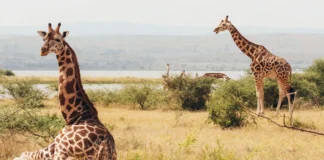
Giraffe: Native giraffes are now gone from the wild, too, except for a few dozen kept inside Sumu Wildlife Park in Bauchi State. Only about 48 giraffes survive there, protected within fences. Without these efforts, they might have disappeared completely.

Animals That Could Soon Follow

Some of Nigeria’s most famous animals are just a few steps away from extinction:

Lion: Fewer than 50 adult lions remain in the country, mostly in Kainji Lake National Park and Yankari Game Reserve. They face threats from poachers, shrinking prey numbers, and human encroachment on their land.

Cross River Gorilla: Found only in parts of Cross River State, this rare gorilla is one of the world’s most critically endangered species. Scientists believe fewer than 100 are left. Forest destruction and illegal hunting have left them with almost nowhere safe to live.

Why Are We Losing So Much?

In the past, traditional customs helped regulate hunting. Some communities had sacred forests, hunting bans during breeding seasons, or taboos that protected certain species. However, today’s modern pressures have exacerbated the situation.

  • Habitat loss: Deforestation for farming, logging, and the construction of new buildings is destroying the natural habitats of animals.

  • Poaching and bushmeat trade: Many people hunt wildlife for income or food, but the pace of killing is far higher than nature can recover from.

  • Weak enforcement: Although Nigeria has wildlife protection laws, many are not properly enforced due to inadequate funding, corruption, and a lack of political will.

What’s Being Done, And What’s Not Enough

Some efforts are being made. Nigeria has several national parks and reserves meant to protect wildlife. Conservation groups are working to breed and protect endangered species, such as giraffes. Awareness campaigns are also teaching people about the importance of wildlife.

However, progress is still slow. Many parks lack adequate funding, and rangers are often under-equipped and underpaid to perform their jobs effectively. In many rural areas, poverty makes hunting and land clearing more attractive than conservation.

The Future Depends on Us

If nothing changes, Nigeria could lose even more species in the next few decades. The disappearance of lions, gorillas, and other animals isn’t just a loss for nature, it’s a loss of national pride, heritage, and tourism potential.

Our generation has the knowledge and tools to stop this. Protecting wildlife means protecting our future, cleaner environments, richer biodiversity, and more opportunities for eco-tourism and education.

We must move beyond the old belief that animals will “always be there.” They won’t, not unless we act now. With stronger laws, community education, and a genuine commitment from both the government and citizens, Nigeria can still save its wildlife before it’s too late.

World Vulture Day 2025

0

Every year, on the first Saturday of September, people around the world pause to celebrate a bird that doesn’t always get the best reputation: the vulture. Known officially as International Vulture Awareness Day (IVAD), this observance started in 2009 as a joint effort between South Africa’s Birds of Prey Programme and the UK’s Hawk Conservancy Trust. Since then, it has evolved into a global movement, with conservation organizations, schools, and communities joining forces to raise awareness about the importance of vultures and the urgent need for their protection.

Nature’s Cleanup Crew

Vultures may not be as glamorous as eagles or as colorful as parrots, but their role in nature is unmatched. They act as “nature’s cleanup crew”, feeding on dead animals before these carcasses can rot and spread disease. Their digestive systems are incredibly strong, capable of destroying harmful bacteria and pathogens, including anthrax, rabies, and botulism.

In doing this, vultures protect both humans and wildlife from dangerous outbreaks. They also recycle nutrients back into the ecosystem, thereby maintaining natural balance. When vultures disappear, other scavengers,  often less efficient ones like feral dogs, increase the risk of diseases spreading into human communities. Simply put: without vultures, the health of entire ecosystems, including people, is at risk.

A Grim Population Decline

Sadly, vultures are among the most threatened bird species in the world today. Africa, in particular, has seen shocking declines. According to the IUCN Red List, four of Africa’s 11 vulture species are now Critically Endangered, with population drops of up to 97% in some regions.

Key species in West Africa and Nigeria include the Hooded Vulture, White-backed Vulture, Lappet-faced Vulture, White-headed Vulture, and Rüppell’s Vulture. All of these species face steep declines and, without intervention, may vanish within a few decades.

Globally, other species such as the Egyptian Vulture, Griffon Vulture, and Bearded Vulture are also under severe pressure. The loss of these birds would not only be an ecological tragedy but also a public health disaster.

Why Are Vultures Disappearing?

Several human-driven threats are pushing vultures toward extinction:

  • Poisoning: Sometimes predators like lions or hyenas are targeted with poisoned carcasses. Vultures, being scavengers, feed on the same carcasses and die in large numbers. In some incidents, hundreds have been wiped out at once.
  • Illegal trade: Vulture body parts are sold in traditional medicine markets, especially in West Africa, where they are believed to bring luck, protection, or healing.
  • Habitat loss: Expanding farms, roads, and cities reduce the safe spaces vultures need for nesting and feeding.
  • Infrastructure: Power lines, wind turbines, and other developments lead to accidental collisions and electrocution.
  • Veterinary drugs: Medicines like diclofenac, used on livestock, are toxic to vultures when they eat treated carcasses.

A Cultural Snapshot

In Africa and Nigeria, vultures also hold cultural significance. Among the Yoruba, the vulture (ìgun) is regarded as a sacred messenger of the divine. Other communities see them as either spiritually powerful or unclean, depending on local traditions. While some beliefs have helped protect vultures, others unfortunately fuel the demand for their body parts. This mix of reverence and exploitation reveals how deeply vultures are intertwined with human societies, for better and for worse.

Conservation Efforts

Thankfully, many organizations and communities are fighting back.

  • The Vulture Conservation Foundation (VCF) and BirdLife International lead international research, education, and conservation programs for vultures.
  • In Nigeria, the Nigerian Conservation Foundation (NCF) raises awareness, monitors populations, and collaborates with law enforcement to curb illegal trade.
  • The West African Vulture Conservation Action Plan (WAVCAP 2023–2043) is a long-term regional strategy spanning 16 countries aimed at addressing poisoning, illegal trade, and habitat loss.
  • Local projects also include creating “Vulture Safe Zones”, promoting alternatives to harmful veterinary drugs, and engaging with traditional healers to reduce the demand for vulture parts.

These efforts combine modern science with community action, demonstrating that conservation is most effective when local people are involved.

Why Awareness Matters

World Vulture Day is about saving the balance of nature. Schools, NGOs, and communities use this day to host events such as art competitions, lectures, and field demonstrations. The goal is to inspire people, especially young people, to view vultures not as dirty scavengers, but as essential allies in maintaining a healthy environment.

Looking Ahead

The outlook is challenging, but not hopeless. If nothing changes, many vulture species could vanish within our lifetime, with disastrous consequences for ecosystems and public health. But with stronger laws, better education, safer veterinary practices, and active community participation, we can turn the tide.

The lesson is clear: protecting vultures means protecting ourselves. The next time you see a vulture circling overhead, don’t think of it as a symbol of death. Think of it as a guardian, silently doing the hard, dirty work that keeps our world clean and safe.

Yoruba Hunters and Conservation

0

In southwest Nigeria, the relationship between a hunter and the forest is more than just a search for food. It’s a deep, complex connection built on generations of knowledge, respect, and spiritual understanding. Long before modern conservation became a global topic, the Yoruba people practiced their own form of it, not as a set of policies, but as a way of life. This wasn’t about “saving the environment” as a separate task; it was about maintaining balance in a world where humans, animals, and “spirits” all shared the same space.

To understand this, we need to look past the hunt itself and into the heart of a culture that saw nature as a powerful, living entity that deserved respect.

A world governed by respect, not rules

For a traditional Yoruba hunter, the forest is a realm with its own order, and entering it means agreeing to its terms. This worldview is what some call Traditional Ecological Knowledge (TEK), but for the people who live it, it’s simply the way things are. It’s a library of wisdom held not in books, but in stories, songs, and daily habits.

Central to this is Ògún, the Yoruba deity of iron and the hunt. A hunter is considered a follower of Ògún, and this relationship comes with serious responsibilities. It means you don’t just take from the forest; you must uphold its balance to show respect to the deity who governs it. This belief shapes a core principle: animals are not just resources. They are fellow beings who live, feel, and are part of the same spiritual world as humans. This perspective naturally prevents waste and cruelty.

This respect is put into practice through a system of cultural taboos—unwritten laws often more powerful than modern regulations. Among Yoruba hunters, certain animals are never to be killed because they are tied to the gods (òrìṣà) and the spiritual order:

  • Vulture (Ìgun): Sacred messenger of Olódùmarè; killing it is strictly forbidden.
  • Ground Hornbill (Agbako): Revered bird; proverb warns its killer “must begin counting their days.”
  • Parrot (Ayékòótó): Regarded as wise and sacred; often domesticated, not hunted.
  • Buffalo (Ẹrú): Protected by devotees of Ọya, the mother of buffaloes; hunting it breaks divine law.
  • Monkeys (e.g., Colobus): Linked to fertility and to Ògún; respected as spiritual offspring.
  • Elephant (Erin): Rarely hunted; honored with rituals, seen as noble beings.
  • General practice: Avoid killing animals during mating or pregnancy to preserve life’s continuity.

These taboos, born from belief, serve a practical ecological purpose: they shield vital species and sustain the balance of the forest. In the same way, hunting was forbidden during certain seasons, timed with animal breeding cycles, ensuring that populations could replenish for future generations.

The Wisdom in Ìjálá Chants

So, how was this knowledge passed down? One of the most beautiful ways is through Ìjálá, the traditional chants of Yoruba hunters.

Think of Ìjálá as a blend of poetry, song, and oral encyclopedia. Performed with a rich, rhythmic voice, often to the beat of drums, these chants are far more than entertainment. They are a vital tool for education. Ethnographers note that Ìjálá verses are filled with vivid ecological detail: descriptions of animals, their sounds, feeding habits, and even the plants used for food or medicine. A young hunter listening learns not only how to track and identify wildlife, but also how to forage wisely from the forest’s plants without harm (Jolan, 2021; NiCHE, 2023).

But Ìjálá goes beyond practical knowledge. The chants also embed the ethics of the hunt. They recount the deeds of legendary hunters, praising not just their bravery, but their wisdom and restraint. In some verses, the elephant (ẹrin) is celebrated as a “spirit in the bush,” so revered that hunters approached it with ritual respect rather than reckless slaughter. The chants describe animals with awe, reinforcing the idea that they are fellow beings in a shared spiritual world.

Through Ìjálá, the rules of the forest become part of a hunter’s identity. The lessons are clear: a great hunter is not the one who kills the most, but the one who understands the forest most deeply and moves within it respectfully. In this way, oral poetry carried both practical survival skills and a conservation ethic, long before the word “conservation” was ever used.

Living Proof of a Conservation Ethic

The clearest proof of the Yoruba conservation ethic can be found in the sacred groves (patches of old forest that have survived for centuries), not because of fences or government patrols, but because people believed the gods lived there.

To step into a grove is to enter holy ground. These forests are seen as the homes of deities, and so they carry their own invisible laws: no hunting, no farming, no felling of trees. To break them is to risk angering the gods and your community. In practice, this turned the groves into community-enforced sanctuaries, long before anyone spoke of “protected areas.”

The Osun-Osogbo Sacred Grove is the most famous example, today recognized as a UNESCO World Heritage Site. But there are many others scattered across Yoruba land, each fiercely guarded by local traditions. Within them, priestesses and elders still perform rituals, and taboos keep human activity in check.

The ecological result is remarkable. Scientists now confirm that these groves are islands of biodiversity, sheltering plants, monkeys, birds, and medicinal species that have vanished from surrounding farmlands. In a landscape often cleared for cultivation, these sacred forests stand as living time capsules, a reminder that spiritual reverence can be one of the most effective conservation tools of all.

A Lesson in Connection

In today’s world, where forests are shrinking and species vanish almost daily, it’s tempting to think conservation is a modern invention. But the Yoruba remind us that it is, at its heart, an ancient human instinct. Long before laws or policies, people kept balance by listening to the forest, respecting its rhythms, and honoring the beings that lived within it.

For Yoruba hunters, this wasn’t framed as “environmental protection.” It was simply life. To hunt was to enter into a covenant with the land, guided by the wisdom of Ògún, the restraint of taboos, the songs of Ìjálá, and the sacredness of groves where gods dwell. Survival was never about domination; it was about harmony.

That is the lesson worth carrying forward. Conservation will always need science, but it also needs stories, songs, and reverence. The Yoruba show us that protecting the earth doesn’t begin with technology or treaties. It begins with respect, with the willingness to see animals not as trophies, trees not as timber, but all as fellow travelers in the same world.

If we can remember that, then perhaps we too can learn to walk the forest paths as Yoruba hunters once did: with knowledge in our minds, humility in our hearts, and a deep sense that to care for the earth is to care for ourselves.

World Cleanup Day 2025

0

About World Cleanup Day

World Cleanup Day is one of the largest civic movements of our time, mobilizing millions across continents to tackle the mounting global waste crisis. Its roots trace back to Estonia in 2008, when 50,000 citizens came together to remove over 10,000 tons of illegal waste in just one day. This inspiring act sparked the birth of Let’s Do It World, the organization now coordinating annual cleanups in over 190 countries.

Since its global debut in 2018, World Cleanup Day has continued to grow in scale and significance. In 2024, the movement achieved a historic milestone, its first recognition as a United Nations International Day. That year, millions of people from 191 countries joined forces, proving that environmental action can transcend borders, politics, and cultures. In 2025, the global cleanup will take place on September 20, continuing its mission to unite communities for cleaner, healthier environments.

2025 Theme and Goals

The 2025 campaign carries the slogan “Strive for Five”, urging communities to mobilize at least 5% of their populations. Research indicates that this percentage marks the tipping point necessary to drive systemic societal and environmental change.

This year’s focus highlights one of the most pressing yet under-discussed waste issues: the pollution caused by the fashion and textile industry. Globally, an estimated 92 million tonnes of textiles are discarded annually, the equivalent of a garbage truck full of clothes being dumped every second. Addressing textile waste is closely tied to promoting sustainable consumption and transitioning toward circular economies.

World Cleanup Day directly supports several United Nations Sustainable Development Goals (SDGs), including:

  • SDG 11: Sustainable Cities and Communities 
  • SDG 12: Responsible Consumption and Production 
  • SDG 13: Climate Action 
  • SDG 14: Life Below Water 
  • SDG 15: Life on Land 

By aligning grassroots cleanups with these global frameworks, the movement not only removes waste but also pushes governments and businesses toward lasting policy change.

Global Impact

The numbers tell a powerful story of collective action:

  • In 2022, over 15 million volunteers worldwide removed 60,000 tons of waste, contributing more than 30 million volunteer hours. 
  • In 2024, participation expanded to 191 countries, covering 90% of all UN member states. 

From small island nations to bustling megacities, volunteers braved challenges to clear streets, forests, and waterways of plastic, electronics, household waste, and industrial debris.

The Digital Cleanup Day initiative encourages people to declutter their digital spaces, which indirectly reduces carbon emissions linked to data storage. In 2025, over 540,000 participants deleted 2.3 million gigabytes of unnecessary files, resulting in a reduction of approximately 575 tonnes of CO₂ emissions annually.

Spotlight on Nigeria and Africa

In Africa, the day is urgent. Nigeria, for example, generates over 2 million tonnes of plastic waste annually, much of it ending up in waterways, landfills, or the open environment.

Grassroots groups, such as SustyVibes and the Centre for Water and Environment Development (CWED), have been instrumental in mobilizing citizens. Despite challenges such as poor infrastructure, heavy rainfall, and limited resources, Nigerian volunteers consistently show resilience. In 2023, major cleanups in Lagos and Kaduna resulted in markets, neighborhoods, and riverbanks being cleared of plastic and other waste.

Across the continent, local governments, schools, NGOs, and eco-startups collaborate to raise awareness and inspire action. Youth activism especially shines—turning waste into art, launching recycling businesses, and leading education campaigns that reshape community attitudes.

Why It Matters in 2025

Waste is a global crisis tied directly to climate change, biodiversity loss, and public health. Plastic and textile waste leach toxins into soil and water, choke marine life, and clog urban drainage systems, worsening flooding.

World Cleanup Day matters because it proves that people power can spark systemic change. By gathering even a small critical mass, communities reclaim ownership of their environments while demanding accountability from industries and policymakers.

How to Get Involved

Everyone has a role to play:

  • Individuals & Communities: Join or host cleanup drives, share stories online, and adopt waste-reducing habits. 
  • Schools & Youth Groups: Organize student cleanups, recycling projects, or creative “art from waste” exhibitions. 
  • Businesses: Sponsor cleanups, volunteer staff, or implement better internal waste policies. 
  • Digital Participants: Take part in Digital Cleanup Day by deleting unused apps, emails, and files. 

To officially join, events and volunteers can register through worldcleanupday.org.

Closing Thoughts

World Cleanup Day 2025 is about hope, unity, and responsibility. Whether you’re clearing plastics from a riverbank in Nigeria, reducing textile waste in Europe, or deleting digital clutter at home, your action contributes to a cleaner and healthier planet.

As Let’s Do It World President Heidi Solba reminds us: “Striving for five percent participation unlocks the power of collective action for lasting change.” On September 20, 2025, let’s rise together to leave a legacy of clean, thriving communities for generations to come.

World Gorilla Day 2025

0

Every September 24, the world pauses to celebrate World Gorilla Day, a day dedicated to honoring these remarkable great apes and renewing our commitment to their survival. Established in 2017 to commemorate the 50th anniversary of Dian Fossey’s pioneering Karisoke Research Center in Rwanda, the day serves as a global reminder that the future of gorillas, and the forests they call home, is tied to our choices and actions.

Why September 24 Matters

The choice of September 24 is symbolic. It marks the beginning of modern gorilla conservation, rooted in Dian Fossey’s groundbreaking research and relentless advocacy. Her legacy continues today, inspiring countless conservationists, rangers, and community members who dedicate their lives to protecting gorillas.

This year’s theme highlights urgent challenges, including poaching snares, habitat destruction, and climate change. With snares on the rise in several gorilla ranges, conservation groups are calling for stronger forest patrols, better technology, and deeper community partnerships.

Getting to Know Gorillas

  • Mountain gorillas (~1,000+) are found in the misty forests of Rwanda, Uganda, and the Democratic Republic of Congo (DRC).

  • Eastern lowland gorillas (~5,000) inhabit the Congo Basin, the largest of their range but also among the most threatened.

  • Western lowland gorillas (~90,000), widespread in Central and West Africa, but heavily impacted by poaching and disease.

  • Cross River gorillas, the rarest of all, with fewer than 300 individuals surviving in fragmented forests along the Nigeria–Cameroon border.

Despite decades of challenges, the mountain gorilla offers a beacon of hope. From fewer than 250 individuals in the 1980s, their numbers have slowly rebounded thanks to conservation efforts, eco-tourism revenue, and community involvement.

The Challenges They Face

Gorillas’ biggest threats mirror the pressures humans put on nature:

  • Habitat loss from logging, farming, and mining.

  • Poaching and snares not only kill gorillas but also injure them severely.

  • Diseases from respiratory infections to Ebola are easily transmitted because of our genetic closeness.

  • Climate change, which alters the forests gorillas depend on.

  • Human–wildlife conflict, as shrinking ranges bring gorillas into contact with villages.

Conservation in Action

Conservation isn’t just about protecting gorillas; it’s about empowering people. In Rwanda, Uganda, and DRC, eco-tourism has turned gorillas into ambassadors of economic growth. Programs like Rwanda’s Kwita Izina, the annual baby gorilla naming ceremony, raise awareness while celebrating conservation success.

Technology is also playing a growing role, as AI-driven camera traps and satellite monitoring help rangers track gorillas and detect illegal activity. Cross-border collaborations, such as the International Gorilla Conservation Programme (IGCP), ensure that protection extends across national boundaries.

Spotlight on Nigeria and Cameroon

For Nigeria and Cameroon, the conservation story is especially urgent. The Cross River gorilla is Africa’s most endangered gorilla subspecies. Elusive and rarely seen, these gorillas are monitored mainly through camera traps and nest surveys. Their forests are threatened by the expansion of farming and illegal hunting.

Encouragingly, community-led initiatives, such as the Mbe Mountains Community Wildlife Sanctuary in Nigeria, are making a difference. Local rangers, often drawn from nearby villages, are being trained and equipped to patrol forests, remove snares, and collaborate with communities on sustainable land use practices.

For Nigerians, this year’s World Gorilla Day is a call to action: support conservation groups, join awareness programs in schools, advocate for stronger forest protection policies, or simply share the story of these incredible apes.

Why World Gorilla Day Matters in 2025

At its heart, World Gorilla Day is about connection. Protecting gorillas safeguards biodiversity, strengthens forest ecosystems, and supports livelihoods through tourism and conservation jobs. It also directly ties into global goals, such as the UN Sustainable Development Goals (SDGs), focusing on life on land, climate action, and partnerships.

Gorillas symbolize resilience, but they also remind us of responsibility. Their survival depends on the choices humanity makes in the next decade.

How You Can Celebrate and Contribute

  • Support NGOs such as the Dian Fossey Gorilla Fund, IGCP, or Rainforest Trust.

  • Take action locally by organizing a school project, art contest, or fundraiser to support conservation.

  • Promote eco-tourism that benefits both wildlife and communities.

A Personal Call to Action

World Gorilla Day 2025 is more than a commemoration; it’s a promise. A promise that the sight of a gorilla mother cradling her infant, or the call of a silverback echoing through the forest, will not vanish into memory. By learning, sharing, donating, or simply raising your voice, you help ensure these gentle giants continue their journey alongside us.

The World is Getting Quieter. Here’s Why That’s a Loud Warning.

0

We spend a lot of time looking at nature, but we’ve forgotten to listen to it. A healthy environment is never actually quiet. On a summer night, you can hear cicadas buzzing. After rain, ponds come alive with frogs’ croaks. At sunrise, the forest explodes with birdsong. That noise is the sound of a healthy, working planet. It’s a sign of life.

But that noise is fading. Ecosystems across the globe are falling silent, and that silence is one of the clearest warnings we have that something is deeply wrong.

You Can Measure a Forest’s Health By Listening to It

Scientists are now listening to the planet to gauge its health. The field is called soundscape ecology, and the idea is simple: healthy places are noisy and have a wide variety of sounds. When those sounds start to disappear, it means the animals that make them are disappearing, too.

The evidence is getting hard to ignore:

  • Silent Frogs: Ponds and wetlands used to be loud with the sound of frogs. Now, many of them are quiet. Amphibian populations have been wiped out by disease and the loss of their habitats.
  • Fewer Birds: Since 1970, North America has lost nearly 3 billion birds. That’s not just a number on a chart; it’s a loss you can actually hear. The blast of birdsong at sunrise is much thinner and simpler than it used to be.
  • Quiet Reefs: You might think coral reefs are silent, but healthy ones are full of the clicks and pops of shrimp and fish. These sounds help young fish find a safe place to live. But as coral reefs die, they become silent. 

The silence is a direct result of our destruction of habitats, climate change, and pollution. We’re taking apart the systems that support life, and the resulting quiet is the proof.

Why This Silence is Such a Big Deal

A quiet ecosystem is a system in failure. Sound is like an ecosystem’s vital signs. We can often detect a problem, such as the disappearance of a species of insect or frog, long before we see the full impact of its absence.

Animals also depend on sound to survive. They use it to find a mate, warn each other about predators, and locate food. When one animal’s call vanishes, it can create a chain reaction that affects the entire food web.

Finally, it’s a loss for us. Our connection to nature is tied to its sounds. A world without the buzz of bees or the song of birds is a less interesting, less beautiful place to live.

What Can We Do?

This doesn’t have to be the end of the story. We can bring the noise back. The first step is to just pay attention.

Next time you’re outside, in a park or even your own backyard, just stop and listen for a few minutes. What do you hear? What’s missing? From there, you can take simple steps to help.

  1. Plant for Local Wildlife: Native plants, flowers, and trees provide an invitation for local bees, butterflies, and birds to return. They provide the right food and shelter.
  2. Add Water: A simple birdbath or a small pond can become a hub of activity. It brings back birds, frogs, and insects, and with them, the sounds of life.
  3. Support Conservation: National parks, wildlife refuges, and local conservation groups protect large areas where these natural sounds can continue on a bigger scale. Supporting them helps everyone.
  4. Become a Citizen Scientist: Use apps like BirdNET to identify birds by their song, or join projects like the Nigerian Bird Atlas Project (NiBAP). By recording and sharing what you hear, you contribute to the scientific understanding needed to protect these soundscapes.

The sounds of nature are a sign of life. A loud forest or a buzzing field is a sign that things are working. The growing silence is a clear warning that they’re not. We just have to be willing to listen.